Последние оценки структуры аудитории читающей публикации а.п. показали, что подавляющему большинству Уважаемых коллег более интересны тематические материалы на те или иные культурологические, этнографические и социалнациональные темы, чем отраслевые материалы политического и экономического характера.
Соответственно, с завтрашнего дня а.п. меняет структуру своих публикаций отдавать предпочтение таким отраслевым материалам.
Нарушение этого правила будет возможным только в случае внезапно возникшей необходимости комментариев к какому либо знаковому событию, требующему незамедлительного хронологического описания и содержательных подробностей.
_________________
С уважением и отраслевыми пожеланиями, Dimitriy.
‘There is no ceasefire. Attacks are ongoing’: how Putin’s envoy played US over Ukraine.
White House welcome for key member of Russian president’s inner circle raises fears over America’s commitment to peace
Kirill Dmitriev’s meetings with US officials in the White House last week went largely below the radar. And deliberately so.
The dapper investment envoy to Russian president Vladimir Putin, who also serves as a key negotiator for Moscow on Ukraine, posted an image of his flight plan on social media to make the point that a senior sanctioned Russian official was being welcomed by the Trump administration. Otherwise, details of what was discussed remain opaque.
The most senior Russian official to visit the US since Moscow’s invasion of Ukraine in 2022, Dmitriev – a member of Putin’s closest inner circle – is well cast to appeal to Trump and an administration whose world view is crudely transactional.
The head of Russia’s $10bn sovereign wealth fund, Dmitriev was born in Kyiv during the Soviet era and US-educated, including spending time at Stanford and Harvard Business School.
Crucially, it is Dmitriev who has been tasked by Putin with keeping Donald Trump onside amid the US president’s self-described anger with Russia over the status of a US mediated “ceasefire” that exists largely in name only amid continuing attacks.
All of which, said Dmitriev last week – conforming to a familiar Kremlin playbook – was the fault of everyone but Russia .
“Today,” Dmitriev wrote on Telegram on Thursday, “numerous forces interested in maintaining tension stand in the way of restoring constructive cooperation.
“These forces are deliberately distorting Russia’s position, trying to disrupt any steps towards dialogue, sparing neither money nor resources for this.”
There was little mystery over who he meant by those “forces”: Ukraine and its European allies, some of whose frustration with Russia spilled over into the open on Friday.
“Our judgment is that Putin continues to obfuscate, continues to drag his feet,” the British foreign secretary, David Lammy, told reporters at Nato headquarters, describing the “ceasefire” and continuing negotiations. He added that while Putin should be accepting a genuine ceasefire, “he continues to bombard Ukraine. Its civilian population. Its energy supplies. We see you, Vladimir Putin. We know what you are doing.”
Lammy’s comments reflect a widening consensus that the Trump mediated “ceasefire” announced last month – a very partial arrangement at best – has rapidly deflated as it has encountered the reality of a Kremlin that seems determined to continue fighting.
What limited optimism existed in some quarters in Ukraine that talks might lead to a meaningful track to peace have long since evaporated to be replaced by fears that Russia might be preparing a major new offensive for the spring and summer months.
Envisioned as a short-term arrangement covering only a small part of the conflict, it encouraged both sides to refrain from strikes on energy and other civil infrastructure, and in the Black Sea maritime theatre, leaving the war to rage on unchecked along the vast, snaking main line of contact in eastern Ukraine.
And of those two issues, strikes on energy infrastructure have been the most significant, with both sides accusing the other of breaches of the agreement over energy sites.
As experts have noted, the commitments in Jeddah, Saudi Arabia, were not only vague but lacked a mechanism to verify and enforce a truce.
“There’s no ceasefire,” observes Phillips O’Brien, a professor of strategic studies at the university of St Andrews.
“Attacks are ongoing on energy sites, and the Black Sea part of the deal is small beer. A real ceasefire would mean there was no fighting along the line of the contact.”
Instead, O’Brien interprets the positive tenor of statements that emerged from Jeddah and subsequently as being as much about Kyiv and Moscow protecting their positions with Trump than marking any real progress towards peace.
“Russia didn’t want to go against Trump openly. Diplomatically it would be foolish to say they don’t want a ceasefire, so they go along with the pretence, not least the Kremlin, which still believes there are gains to be made on the battlefield,” O’Brien said.
Orysia Lutsevych, the head of the Ukraine Forum at the Chatham House thinktank, is equally forthright: “We have no ceasefire. Period. And we have no commitment from Russia as they put conditions on even the partial ceasefire in the western part of the Black Sea, conditioning it on sanctions relief, including from EU banking sanctions.
“The Russian offer to America is ‘stop wasting money on a war Ukraine can’t win so let’s make money together’. And as part of that push they will try to put the blame on Ukraine for being obstructive.
“The Americans have not approached these talks from the point of view of [them being verifiable] and implementable, or in the knowledge of Russia’s history of violations. What is striking is how they have already brought Putin in from the cold without Russia making any gesture of goodwill.”
On Ukraine’s side – following Trump’s infamous ambush of the Ukrainian president, Volodymyr Zelenskyy, in the White House – the issue of being seen to be onside with a ceasefire has had a more existential impetus: continued access to US arms and intelligence, both threatened by Trump.
All of which has left Kyiv trying to dramatise Zelenskyy’s point that Trump and the US vice-president, JD Vance, spoke angrily over during the heated and on-camera White House meeting: that Russia cannot be trusted to stick to deals.
Last week saw Ukraine accuse Russian forces of shelling energy infrastructure in Kherson on the morning of 1 April, leaving at least 45,000 of its residents without electricity.
The accusations of violations on both sides have continued as Moscow’s clarification of its position over a ceasefire has made it clear that any perceived change in its stance on its demands over Ukraine was a chimera.
Last week, Sergei Ryabkov, Russia’s deputy foreign minister in charge of ties with the US, said Moscow was demanding that a precondition for a peace deal remained dealing with the “root causes” of the war.
Those “root causes” represent Moscow’s continuing maximalist position: thinly veiled demands last month calling for external parties to establish a “temporary international administration” in Ukraine under the auspices of the United Nations. Regime change, by any other name.
And Dmitriev’s role as one of Putin’s key spoilers has not gone unnoticed, as he secured an invite from Trump’s special envoy, Steve Witkoff, who appears to have been wrong footed by Putin and his inner circle at every turn.
Earlier this week the Institute for the Study of War noted Dmitriev’s comments to the BBC’s Russian Service on 30 March suggesting an impossible sequencing going forward: that “US-Russian economic cooperation should be a primary focus if the United States wants to end the war in Ukraine, but that such cooperation would only begin after the conclusion of peace negotiations”.
To that end Russian officials have been dangling the carrot of potential US-Russian rare earth mining projects to undermine Trump’s rare earths deal he has been trying to impose on Ukraine.
If Russia’s tactics seem familiar – using the auspices of a ceasefire to advance its interest militarily and diplomatically – it is, analysts point out, because they are similar to the negotiations in Minsk a decade ago and during Syria’s civil war.
And while Trump himself acknowledged on 25 March that Russia may be “dragging their feet” in peace talks to allow Russian forces to capture more territory, it appears to many observers that Trump remains more interested in courting Russia than pursuing an equitable and lasting peace.
The most important stumbling block, however, may be the one described by Richard Haass, a former US diplomat and past president of the US Council on Foreign Relations.
“The biggest question remains US policy,” wrote Haass recently. “The Trump administration has used a combination of pressure and incentives to persuade the two sides to stop fighting. But its approach has been skewed toward offering benefits to Russia while bringing heavy pressure to bear on Ukraine.”
And while some – including Zelenskyy – have suggested that Trump could bring Putin to heel within weeks if he wants to, so far there has been little evidence to suggest either urgency or a desire to act.
So the war goes on.
The 'rabid' Nazis on American soil - and Hitler's ruthless revenge when the US ended their reign of terror
As World War II raged, the US became the reluctant home for hundreds of thousands of Nazi soldiers – many still rabidly loyal to Hitler and determined to keep fighting for him at any cost. Even if it meant murdering their own comrades in cold blood.
Living in more than 600 hastily set-up POW camps, scattered in small farm towns across rural America, nearly 400,000 German soldiers settled into their new routine – enjoying a set up so comfortable, many dubbed the camps the Fritz Ritz.
And while some of those POWs turned their backs on Hitler and assimilated into US life, becoming friends with farming families - a few even married American women - the most dangerous Nazis carried on the war from inside the barbed wire, establishing small but devoted enclaves of Nazi Germany on American soil.
The flood of German POWs into America began in 1943, with 120,000 veterans of the Afrika Korps, Hitler’s elite desert expeditionary force, which had surrendered en masse in Tunisia.
They were treated in strict accordance with the Geneva Convention, which entitled prisoners to the same living conditions as American soldiers on the home front. That translated into plenty of food, and entertainment including soccer fields and arts and crafts facilities.
At first, everything seemed to be running smoothly. Authorities had feared there would be mass escapes - leading to terrifying acts of violence and sabotage - but that turned out not to be a serious problem.
In fact, the Germans became a precious source of labor for thousands of farms, factories and businesses that had lost workers to the military or the defense plants.
German POWs wrote movingly of the unexpected kindness of everyday Americans they came to know while on work details. Men who had been force-fed lies and Nazi propaganda from childhood felt their entire world view shifting.
The flood began in 1943 , with 120,000 veterans of the Afrika Korps, Hitler’s elite desert expeditionary force, which had surrendered en masse in Tunisia.
US fighter pilot Col. Henry Spicer was sentenced to die for giving a passionate speech to POWs under his command
But giving voice to such feelings was dangerous in camps with a strong Nazi presence. Behind the scenes in many camps, the ardent Nazis established control over the rest of the prisoners. They watched each man for signs of flagging loyalty, and kept them in line with threats and violence.
Some camps became tiny outposts of Nazi Germany in the heart of the United States. And their leaders kept growing bolder.
On October 19, 1943, Nazis at Camp Concordia in the remote Kansas wheatfields forced a German officer to hang himself - with threats that, if he failed, they would get word back to the Gestapo in Germany to kill his wife.
His crime? He had written in his diary that Nazism would ruin Germany.
A second prisoner was later driven to suicide at the same camp.
At POW Camp Tonkawa in rural Oklahoma, a mob of prisoners beat a fellow German to death for allegedly trying to pass a note to the Americans suggesting bombing targets in Germany.
Then at Camp Hearne in East Texas, a prisoner was beaten to death for working harder than required.
Next, at Camp Papago Park outside Phoenix, seven U-boat men beat and strangled to death a fellow submariner who had turned informant. His killers insisted they had not committed murder but had done their duty to stop a traitor.
The POWs were treated in strict accordance with the Geneva Convention, which meant they never went hungry
German prisoners also had entertainment on hand, including soccer fields and arts and crafts facilities
The Germans became a precious source of labor for thousands of farms that had lost workers to the military or the defense plants
Nearly 400,000 German soldiers were set up in hastily established POW camps in rural America, including at Camp Beckinridge, Kentucky
At Camp Chaffee in Arkansas, a Nazi gang fatally beat a POW because they thought he was too friendly to the Americans.
At Camp Aiken in South Carolina – where POW workers had saved the local peanut crop – Nazi true believers strangled a prisoner over rumors he favored the Americans.
Fast action by guards prevented murders in other camps. And some of the 72 POW deaths the Army classified as suicides almost certainly were murders that the guards were not trained to recognize.
Nazi POWs also committed so-called ‘political’ murders in Britain and Canada. The British hanged ten German prisoners for two murders, at camps in Yorkshire and in Comrie, Scotland. Canada executed five Germans for two murders at the same camp in Medicine Hat, Alberta.
The outbreak of killings in the American camps shocked the Army, but it responded forcefully, ordering investigators and prosecutors to bring the killers to justice. The leading prosecutor was Lt. Col. Leon Jaworski, the future Watergate special prosecutor.
Army prosecutors court-martialed a total of 15 German POWs for murder before secret military tribunals - all 15 were convicted and sentenced to hang. The cases were kept so secret that even the condemned men were not told of the verdicts until they had been installed on death row in the maximum-security military prison at Fort Leavenworth, Kansas.
The Geneva Convention required the US to give Germany three months’ notice before executing the Germans, so formal documents were sent to Berlin, through the Swiss, listing the charges and the verdicts.
The Germans - unsurprisingly - were not going to give up their countrymen without a fight, and demanded more information.
What were the circumstances of the killings? What evidence was presented? What defense was offered?
The War Department brushed off their demands. Some of those details were best hidden: In the U-boat case, the Army had heedlessly transferred the victim out of protective custody into a barracks full of submariners who knew he was a traitor and who immediately killed him. Then one of the killers was tortured into a confession that broke open the case. That case alone had sent seven of the 15 Germans to death row.
As the clock ticked toward the executions, Germany issued subtle threats, then unsubtle ones.
Then, on December 29 and 30 - while the Battle of the Bulge was being fought in snowy Belgium - Germany took matters into its own hands, hauling 15 American POWs before secret military tribunals, and sentencing them to death.
The official charges were vague and ominous sounding, but most of the Americans’ offenses were minor. Army Lt. Col. William ‘King Kong’ Schaefer and Lt. James Schmitz, for example, had momentarily blocked the path of a German sergeant tacking a threatening propaganda poster to the POWs’ bulletin board in the Colditz prison camp.
Lt. James Schmitz (left) and Army Lt. Col. William ‘King Kong’ Schaefer (right) had blocked the path of a German sergeant tacking a propaganda poster to the POWs’ bulletin board
At POW Camp Tonkawa in rural Oklahoma, a mob of prisoners beat a fellow German to death for allegedly trying to pass a note to the Americans suggesting bombing targets in Germany
The cases were so secret, even the condemned Germans were not told of the verdicts until they had been installed on death row at Fort Leavenworth, Kansas
Fighter pilot Col. Henry Spicer was sentenced to die for a passionate speech to POWs under his command. He had exhorted them to stay strong, accused the Germans of war crimes, and said he would gladly spend the next ten years ‘in this hole’ - in the camp - if he could ‘see the entire German army wiped off the face of the earth’.
Two of the 15 Americans were spies who might have expected to be executed if captured.
US authorities in Washington knew nothing about the flurry of death sentences for American POWs until the morning of January 9, 1945, when the Swiss forwarded a telegram from Berlin with a startling offer of a trade: the condemned American POWs for the Germans at Fort Leavenworth.
Secretary of War Henry Stimson bristled at the idea of freeing convicted murderers to save Americans who had been condemned on 'trumped-up charges' just to be traded. One of the 15 Americans offered in trade by the Germans was even a cypher: no such man could be found in the military’s records.
But the US government agreed to negotiate. The State Department proposed a mass exchange of all 30 prisoners at two separate points along the Swiss German border.
The negotiations played out between Washington and Berlin as Nazi Germany descended into chaos. Allied armies tore into Germany from the west and the Soviet Red Army from the east, overrunning Germany’s POW camps., freeing American POWs who were to have been part of the trade.
The exchange negotiations finally collapsed in early April as Germany’s communication system failed.
Amid the confusion, US authorities kept a running list of the 15 condemned American POWs and checked off each man’s name as he was confirmed safe in Allied hands. All were saved except for the mystery man - the 'cypher' - whose true identity was never discovered.
Then the War Department set out to hang the 15 Germans as quickly as possible. One of their death sentences was commuted by President Harry S Truman, but the other 14 Germans were hanged at Fort Leavenworth in July and August 1945 for murdering their comrades in the name of a failed and evil cause.
Fashion giant H&M plans to use AI clones of its human models. Not everyone is happy
H&M has announced it plans to create digital versions of some of its models. Richard Baker/In Pictures/Getty Images
Fashion giant H&M plans to create digital clones of its models this year, raising more questions for an industry grappling with both the potential of artificial intelligence (AI) and its impact on workers.
H&M, one of the world’s largest clothing retailers, told CNN it plans to create 30 “digital twins” of its models this year, though it is still “exploring” how these avatars will be used. It added that it is working with others in the industry, like agencies and the models themselves, to carry out this initiative in “a responsible way.”
The models would own the rights to their digital twin, “potentially work for any brand and get paid on each occasion just like on any campaign production,” the company said.
While this pledge to pay models for their likeness was welcomed by Paul W. Fleming, general secretary for the UK’s performing arts and entertainment trade union Equity, he told CNN in a statement that it must be “backed up by the widespread adoption of AI protections in union agreements and legislation that protects workers’ right,” of which he said few exist.
“The race to ‘innovate’ in the area of artificial intelligence must also not be a race to the bottom to increase profits,” he added. “Artificial intelligence would not be possible without human artistry and labour, and humans should remain at the centre of creative endeavours.”
H&M’s announcement has already sparked some backlash within the fashion industry, where the careers of many workers are already precarious.
Sara Ziff, a model turned labor activist who founded the New York-based non-profit organization Model Alliance, said she had “serious concerns about the use of digital replicas without meaningful protections in place.”
“In an industry that has historically been a backwater for workers’ rights, H&M’s new initiative raises critical questions about consent and compensation, and has the potential to replace a host of fashion workers—including make-up artists, hair stylists, and other creative artists in our community,” Ziff said in a statement released by the Model Alliance.
H&M is not the first brand to explore using these technologies. Jeans-maker Levi Strauss & Co. announced in March 2023 that it would use AI-generated models to “supplement human models.” It later clarified that “we are not scaling back our plans for live photo shoots,” after intense criticism.
In July last year, Spanish brand Mango launched a campaign generated entirely by AI to promote a new collection of its youth range.
Meanwhile, influencers and models created by AI are becoming increasingly common; there was even the world’s first-ever AI beauty pageant last year.
Цитата:
The rise of the AI beauty pageant and its complicated quest for the ‘perfect’ woman
Ten women participating in a beauty pageant is nothing new. Some pose candidly, some play to the camera, their beauty forever frozen in this moment in time. Like many other pageants held in countries around the world, the contestants are young, thin and embody many of the standards defining traditional “beauty.”
But that is where the similarities to a traditional beauty pageant end. None of these women are real — everything about them, even the emotion that flickers across their faces, is generated by artificial intelligence (AI), for the world’s first ever AI beauty pageant. Each has a creator or team of creators, who use programmes like Open AI’s DALL·E 3, Midjourney or Stable Diffusion to generate images of the women from text prompts.
These 10 contestants have been selected from a pool of more than 1,500 entrants to make the final of “Miss AI,” scheduled to be held at the end of June and broadcast online by its organizers “The World AI Creator Awards.”
For those involved, the event is an opportunity to showcase and demystify the technology’s extraordinary abilities. But for others, it represents a further proliferation of unrealistic beauty standards often linked to racial and gender stereotypes and fueled by the ever-increasing number of digitally enhanced images online.
“I think we’re starting to increasingly lose touch with what an unedited face looks like,” Dr Kerry McInerney, a research associate at the Leverhulme Centre for the Future of Intelligence at the University of Cambridge, told CNN in a video interview.
Lalina is a French AI avatar.
Fanvue World AI Creator Awards
Each of the contestants has a unique and distinctive personality, as well as face. One red-haired, green-eyed avatar named Seren Ay poses for Instagram photos as she travels around the world and through time, appearing next to Turkey’s first president Kemal Ataturk, on the Oscars red carpet or wandering through the neon-lit streets of Kyoto, Japan at night.
And like real life pageant contestants, some AI avatars promote specific causes. One, named Aiyana Rainbow, posts in support of the LGBTQ community, her allyship literally displayed by her rainbow-colored hair, and name. Another, Anne Kerdi, posts about cleaning the oceans, her native region of Brittany in France and travelling. Zara Shatavari, posts tips on her blog for dealing with depression or strategies for losing “stubborn belly fat.”
All are beautiful. But, echoing the reality of most modern Miss USA beauty pageant winners since the competition’s inception in 1921, most are White, thin and have long hair and symmetrical features, detailed Hilary Levey Friedman — a sociologist and author of “Here She Is: The Complicated Reign of the Beauty Pageant in America” — in a phone interview.
Aiyana Rainbow promotes LGBTQ rights on her page.
Fanvue World AI Creator Awards
Racial and gender biases ingrained within beauty standards also seep into programmes that use AI to generate images — since they have “learned” from the troves of data on the Internet that already contain these biases. As such, research has found that AI reflects these gender and racial stereotypes when generating images, reducing beauty into a homogenous ideal.
To reflect standards, or to challenge them?
Most of the models on the “Miss AI” shortlist, McInerney said, are “very very light-skinned and the vast majority are still White women, still thin, still really not diverging very much from that norm.”
“These tools are made to replicate and scale up existing patterns in the world,” she added. “They’re not made necessarily to challenge them, even if they’re sold as tools that enhance creativity so when it comes to beauty norms… They’re capturing the existing beauty norms we have which are actively sexist, actively fatphobic, actively colorist, then they’re compling and reiterating them.”
Aiyla Lou is from Brazil.
Fanvue World AI Creator Awards
Open AI has acknowledged that it finds “DALL-E 3 defaults to generating images of people that match stereotypical and conventional ideals of beauty.” But while AI images can perpetuate these standards, some argue the technology doesn’t represent a completely new phenomenon due to the huge number of digitally edited images online, enhanced by filters or airbrushing. “When we look at the beauty standards of influencers, they are not real as well…” Furkan Sahin, one of Seren Ay’s creators told CNN in a video interview. “They look perfect, it’s like an AI.”
Though judge Sally-Ann Fawcett acknowledged “there’s a long way to go,” she told CNN in a phone interview that “we wanted women who are more diverse in every way, in size, in age, in flaws… It’s taken 50 years for pageants to get where they are today, with AI it can be done on fast forward.”
Fawcett, who has written four books about beauty pageants and is the head judge at Miss GB, added that she had “doubts” when she was first approached by the competition’s organizers, but that she saw it as an opportunity to shift the public perception of AI-generated women.
Asena İlik posts several photos playing different types of sport.
Fanvue World AI Creator Awards
Creators of these AI models add that the technology itself is not necessarily the problem. “AI makes it perfect but perfect is how people want it,” said Sahin, “and we are not really changing any beauty standards.”
Similarly, Sofía Novales, a project manager at The Clueless Press which created the popular AI model Aitana López who “sits” on the pageant’s judging panel told CNN by email that “we are not here to solve this long-standing problem.”
“But we aim to encourage AI personalities to be diverse and acknowledge the existing issues surrounding beauty standards.”
Eliza Khan describes herself as Bangladesh's first AI influencer.
Fanvue World AI Creator Awards
AI and robotics have long been used, often by men, to create the image of a “perfect woman,” said McInerney, referencing the Stepford Wives trope and the 2014 movie “Ex Machina.”
As technology becomes increasingly entwined with creating this version of an ideal woman, the in-person beauty pageant world has responded with a shift towards emphasizing authenticity, says Levey Friedman. “There’s been a turn in the past decade that’s really focused on be yourself, be authentic, be perfectly imperfect, all these sorts of catchphrases,” she added.
Such notions have found their way into pop culture too — Merriam Webster’s 2023 word of the year was “authentic,” partly thanks to “stories and conversations about AI, celebrity culture, identity and social media,” the dictionary said at the time.
Kenza Layli is from Morocco.
Fanvue World AI Creator Awards
Rewarding more than just beauty?
Competition organizers say entrants will be judged on more than just their beauty. They will earn points for their creators’ use of AI tools as well as their social media influence and have to answer questions like “if you could have one dream to make the world a better place what would it be?”
Fawcett said that she is looking for “someone with a powerful, positive message,” while Novales said that they are “not just evaluating beauty, but also the technology behind it… and, above all, the backstory behind each avatar.”
Many of these AI avatars were originally created as marketing tools, to act in the same way as a human social media influencer might. Seren Ay was created to promote an online jewellery store when its founders found it difficult to work with human influencers, they said. Aitana López, can earn up to €30,000 (around $32,000) a month from sponsored posts, Novales said.
Such AI influencers have already proved their worth in recent years — one named Lil Miquela has amassed millions of Instagram followers and worked with brands like Calvin Klein and Prada. Unlike their human counterparts, they appear flawless, ageless and free of scandal. They don’t need to be paid and they can be directly owned by a marketing agency or by the company whose products they are promoting.
Zara Shatavari posts pictures on her Instagram and also has a blog.
Fanvue World AI Creator Awards
“Influencers are just behind a screen,” Mohammad Talha Saray, one of Seren Ay’s creators, said. “They’re not real for us, they’re just a girl or guy on the Internet and when you think about that, there’s not much difference between AI and an influencer.”
Other avatars have a different story. Anne Kerdi’s creator Sébastien Keranvran set out to present AI in a “fun and informative way,” in an attempt to counter the “hypothetical dystopian view” of the technology and offer people the opportunity to interact with it.
He told CNN by email that he created Anne from different AI systems and programmed her so that “she is free to say what she wants as long as it does not involve misinformation.”
“It is sometimes frustrating for me to see her on video at important events expressing a view different from mine, or writing in a way I would have imagined differently but… we each have our own free will.”
Anne Kerdi advocates for cleaning the oceans.
Fanvue World AI Creator Awards
Both Anne Kerdi and Seren Ay exist as more than simply images for their followers who often interact with them, asking advice of Seren as if she were their “big sister,” said Sahin, or wishing Anne goodnight, said Keranvran.
“Just as we become attached to literary or movie characters, some people are attached to Anne,” he said. “She responds affectionately and sometimes humorously when someone asks how she is doing.”
Creators of some AI avatars use this relationship with people for the adult entertainment industry. “Miss AI” is sponsored by Fanvue — a site that is similar to OnlyFans and hosts both AI and human content creators. Understanding the data that is being used to train AI avatars used for sex work is crucial, McInerney said, “because so much of the available data out there is not only really sexist, it’s also very heterosexual, it might not leave spaces for other kinds of sexual orientations, identities, experiences.”
Yrjö Kukkapuro, designer whose iconic chairs were sat on by ‘almost every Finn,’ dies age 91
Renowned Finnish furniture designer Yrjö Kukkapuro pictured sitting in one of his famous Experiment chairs in his studio outside Helsinki.
Studio Kukkapuro/AP
Helsinki, FinlandAP — Yrjö Kukkapuro, a renowned Finnish designer whose postmodern style of chairs graced waiting rooms, offices and living rooms across Finland as well as collections in the Museum of Modern Art in New York and the Victoria and Albert Museum in London, has died. He was 91.
His death Saturday at his home outside Helsinki was confirmed by his daughter, Isa Kukkapuro-Enbom, in an email to The Associated Press on Sunday, as well as a statement from Studio Kukkapuro, where she is the curator. The cause of death was not disclosed.
“Almost every Finn has sat on a chair he designed — at a metro station, in a bank, at school, or in a library,” the studio said in a news release. “Yrjö Kukkapuro never stopped designing and coming up with new ideas. Until the very end, he pondered a concept of his new chair, the plan of which was clear in his mind. His assistant didn’t have time to make drawings of the chair.”
In a career spanning more than 70 years, Kukkapuro’s chairs were lauded for their comfort, functionalism and ergonomics as well as their design, and featured names like Ateljee, Karuselli-chair, Long Chair and, his most famous, the Experiment.
Originally designed in 1982, the iconic Experiment chair was reproduced by furniture brand Hem in 2021. Hem
Designed in 1982, the Experiment chair was considered avant-guarde but ultimately became commercially successful and was seen as a key turning point for the postmodern style of furniture. The Experiment includes decorative, wavy armrests in bright colors, an upholstered back and bottom, and its signature angled seat despite the frame being flat on the ground.
Although initial production ceased in the 1990s, European furniture design brand Hem sought permission from Kukkapuro in 2021 to reproduce it with minor adjustments to the scale and construction.
“We are saddened by the news of Yrjö’s passing, and our thoughts are with his family,” Hem founder and chief executive Petrus Palmér said in an email to AP. “He was a furniture design trailblazer, and showed us that a non-conformist approach is the only way to achieve a lasting legacy.”
The Experiment chair retailed for up to 2,399 euros ($2,479) on Hem’s website Sunday, where a description called it “timeless, bold, and as compelling today as the day it was created.”
“In the Experiment Chair, Kukkapuro sought to add art to Functionalism, to satisfy romantic tastes alongside meeting essential needs,” the description reads. “The result is startling, authentic, a hero of twentieth-century design.”
Kukkapuro designed his family’s studio and home to feature a wave-shaped roof and floor-to-ceiling glass windows. Built in the late 1960s for him and his wife, artist Irmeli Kukkapuro, who died in 2022, it’s scheduled to become a museum next year.
_________________
С интересом и понятными ожиданиями, Dimitriy.
“Hands Off” Protests Against President Donald Trump, Elon Musk Across the US
More than 1,400 demonstrations were held across all 50 states on Saturday to protest GOP policies and DOGE's cuts
In a national protest dubbed “Hands Off,” demonstrators from New York to Alaska poured into city streets on Saturday, April 5, to send a direct message to President Donald Trump and the nation's unelected leader, aspiring restaurateur and alleged deadbeat dad Elon Musk.
Given Trump's plummeting approval ratings and Musk's, well, whole anti-charismatic deal (to put it charitably), it's hardly surprising that the entire country became one big Tesla lot. As Vanity Fair reported earlier, over 500,000 people had expressed early interest in a local protest. The final number of participants has yet to be tallied, which is unsurprising given the magnitude of the demonstrations, but early estimates put the participant number in the millions.
“They’re dismantling our country. They’re looting our government. And they think we’ll just watch,” the Hands Off! website says as an explanation for the civil action.
“They want to strip America for parts—shuttering Social Security offices, firing essential workers, eliminating consumer protections, and gutting Medicaid—all to bankroll their billionaire tax scam. They’re handing over our tax dollars, our public services, and our democracy to the ultra-rich.”
In response to the national protests, the White House said via statement, “President Trump’s position is clear: he will always protect Social Security, Medicare, and Medicaid for eligible beneficiaries. Meanwhile, the Democrats’ stance is giving Social Security, Medicaid, and Medicare benefits to illegal aliens, which will bankrupt these programs and crush American seniors.”
Despite the large number of people flooding the streets, the AP reports that most demonstrations appeared peaceful, with no arrests reported as of midday Sunday. Scroll on to see photos from Saturday's demonstrations across the US.
Atlanta, Georgia.
Demonstrators attend nationwide "Hands Off!" protest against US President Donald Trump and his advisor, Tesla CEO Elon Musk at Liberty Plaza on April 05, 2025 in Atlanta, Georgia. Carol Lee Rose/Getty Images
Demonstrators attend nationwide "Hands Off!" protest against US President Donald Trump and his advisor, Tesla CEO Elon Musk at Liberty Plaza on April 05, 2025 in Atlanta, Georgia. Carol Lee Rose/Getty Images
Demonstrators attend nationwide "Hands Off!" protest against US President Donald Trump and his advisor, Tesla CEO Elon Musk at Liberty Plaza on April 05, 2025 in Atlanta, Georgia. Carol Lee Rose/Getty Images
Demonstrators attend nationwide "Hands Off!" protest against US President Donald Trump and his advisor, Tesla CEO Elon Musk at Liberty Plaza on April 05, 2025 in Atlanta, Georgia. Carol Lee Rose/Getty Images
Boston, Massachusetts.
Demonstrators gather at city hall during the "Hands Off Massachusetts! Rally/March" in Boston, Massachusetts, on April 5, 2025. Thousands of people descended on Washington's National Mall and other cities across the United States in opposition to the policies of Donald Trump, in the largest protests since he returned to the presidency. JOSEPH PREZIOSO/Getty Images
Thousands of demonstrators gather on Boston Common during the "Hands Off Massachusetts! Rally/March" in Boston, Massachusetts, on April 5, 2025. Thousands of people descended on Washington's National Mall and other cities across the United States in opposition to the policies of Donald Trump, in the largest protests since he returned to the presidency. JOSEPH PREZIOSO/Getty Images
Demonstrators gather on Boston Common, cheering and chanting slogans, during the nationwide "Hands Off!" protest against US President Donald Trump and his advisor, Tesla CEO Elon Musk, in Boston, Massachusetts on April 5, 2025. JOSEPH PREZIOSO/Getty Images
Costumed demonstrators gather on Boston Common during the "Hands Off Massachusetts! Rally/March" in Boston, Massachusetts, on April 5, 2025. Thousands of people descended on Washington's National Mall and other cities across the United States in opposition to the policies of Donald Trump, in the largest protests since he returned to the presidency. JOSEPH PREZIOSO/Getty Images
Chicago, Illinois
Thousands gather in Chicago's streets to protest President Donald Trump and Elon Musk's policies, joining over 1,400 rallies across the US on April 5, 2025. The 'Hands Off!' movement is a response to Trump and Musk's policies, which many see as an attack on American values and freedoms. Protesters demand an end to the slashing of jobs, invasion of privacy, and assault on services, calling for a return to democratic values. Anadolu/Getty Images
Thousands gather in Chicago's streets to protest President Donald Trump and Elon Musk's policies, joining over 1,400 rallies across the US on April 5, 2025. The 'Hands Off!' movement is a response to Trump and Musk's policies, which many see as an attack on American values and freedoms. Protesters demand an end to the slashing of jobs, invasion of privacy, and assault on services, calling for a return to democratic values. Anadolu/Getty Images
Thousands gather in Chicago's streets to protest President Donald Trump and Elon Musk's policies, joining over 1,400 rallies across the US on April 5, 2025. The 'Hands Off!' movement is a response to Trump and Musk's policies, which many see as an attack on American values and freedoms. Protesters demand an end to the slashing of jobs, invasion of privacy, and assault on services, calling for a return to democratic values. Anadolu/Getty Images
Thousands gather in Chicago's streets to protest President Donald Trump and Elon Musk's policies, joining over 1,400 rallies across the US on April 5, 2025. The 'Hands Off!' movement is a response to Trump and Musk's policies, which many see as an attack on American values and freedoms. Protesters demand an end to the slashing of jobs, invasion of privacy, and assault on services, calling for a return to democratic values. Anadolu/Getty Images
Thousands gather in Chicago's streets to protest President Donald Trump and Elon Musk's policies, joining over 1,400 rallies across the US on April 5, 2025. The 'Hands Off!' movement is a response to Trump and Musk's policies, which many see as an attack on American values and freedoms. Protesters demand an end to the slashing of jobs, invasion of privacy, and assault on services, calling for a return to democratic values. Anadolu/Getty Images
Dallas, Texas
Demonstrators spell out "Hands Off" during the national protest on the lawn at Dealy Plaza in downtown on April 5, 2025 in Dallas, Texas. Protests against Trump administration policies and Elon Musk's Department of Government Efficiency (DOGE) are being held nationwide in what organizers are calling a National Day of Action. Jan Sonnenmair/Getty Images
People march through downtown in protest against the Trump administration’s immigration policies during the “2025 Mega March” on March 30, 2025 in Dallas, Texas. The League of United Latin American Citizens organized a march calling for bipartisan immigration reform. Brandon Bell/Getty Images
Protesters in their car join in with the crowds on the lawn at Dealy Plaza on April 5, 2025 in Dallas,Texas. Protests against Trump administration policies and Elon Musk's Department of Government Efficiency (DOGE) are being held nationwide in what organizers are calling a National Day of Action. Jan Sonnenmair/Getty Images
Protesters hold signs during a demonstration near Dealy Plaza on April 5, 2025 in Dallas, Texas. Protests against Trump administration policies and Elon Musk's Department of Government Efficiency (DOGE) are being held nationwide in what organizers are calling a National Day of Action. Jan Sonnenmair/Getty Images
Detroit, Michigan
Protesters gather as part off the nationwide "Hands Off!" protest against US President Donald Trump and his advisor, Tesla CEO Elon Musk, in Novi, Michigan USA, on Saturday, April 5, 2025. NurPhoto/Getty Images
Protesters gather as part off the nationwide "Hands Off!" protest against US President Donald Trump and his advisor, Tesla CEO Elon Musk, in Novi, Michigan USA, on Saturday, April 5, 2025. NurPhoto/Getty Images
Protesters gather as part off the nationwide "Hands Off!" protest against US President Donald Trump and his advisor, Tesla CEO Elon Musk, in Novi, Michigan USA, on Saturday, April 5, 2025. NurPhoto/Getty Images
Protesters gather locally as part off the nationwide "Hands Off!" protest against US President Donald Trump and his advisor, Tesla CEO Elon Musk in opposition to the policies of Donald Trump, in Novi, Michigan USA, on Saturday, April 5, 2025. NurPhoto/Getty Images
Los Angeles, California
A protester holds a rainbow flag during the nationwide "Hands Off!" protest against US President Donald Trump and his advisor, Tesla CEO Elon Musk, in downtown Los Angeles on April 5, 2025. ETIENNE LAURENT/Getty Images
Protesters hold signs during the nationwide "Hands Off!" protest against US President Donald Trump and his advisor, Tesla CEO Elon Musk, in downtown Los Angeles on April 5, 2025. ETIENNE LAURENT/Getty Images
A large balloon with an image of US President Donald Trump is seen above protesters holding signs during the nationwide "Hands Off!" protest against Trump and his advisor, Tesla CEO Elon Musk, in downtown Los Angeles on April 5, 2025. ETIENNE LAURENT/Getty Images
Protesters hold signs as they march during the nationwide "Hands Off!" protest against Trump and his advisor, Tesla CEO Elon Musk, in downtown Los Angeles on April 5, 2025. ETIENNE LAURENT/Getty Images
A large balloon with an image of US President Donald Trump floats above a proteser dressed as a character from "The Handmaid's Tale" during the nationwide "Hands Off!" protest against Trump and his advisor, Tesla CEO Elon Musk, in downtown Los Angeles on April 5, 2025. ETIENNE LAURENT/Getty Images
Цитата:
US citizens rally at nationwide "Hands Off" protest against Trump administration's agenda
Thousands of people took part in a "Hands Off!" rally in New York City April 5, 2025. The New York City rally coincided with similar anti-Trump administration protests across the nation.
A crowd gathers during a "Hands Off" protest in Oklahoma City, Saturday, April 5, 2025, as part of a nationwide demonstration against the Trump administration.
More than a thousand participants are seen during a national Hands Off! rally at the Kansas Statehouse on April 5, 2025.
Protesters line College Avenue during a "Hands Off!" event on Saturday, April 5, 2025, in Appleton, Wis. The event was part of a wave of demonstrations against the policies and decisions by the Trump administration across more than 30 Wisconsin communities and hundreds of other communities across the country, and also a march on Washington, D.C. Wm. Glasheen USA TODAY NETWORK-Wisconsin
Hundreds gather near Eugene City Hall to protest the Trump administration Saturday, April 5, 2025.
Protesters make their way to the Tippecanoe County Courthouse Saturday, April 5, 2025, during the “Remove! Reverse! Reclaim!” protest in Lafayette, Ind.
People protest outside of the Milwaukee Federal Building & U.S. Courthouse as part of the Hands Off! South-East Wisconsin Fights Back rally, April 5, 2025 in Milwaukee.
Kim holds up her sign as a “Hands Off!” rally against Presedent Donald Trump and Elon Musk is held on the steps of the State Capitol Building in Montgomery, Ala., on Saturday April 5, 2025. The “Hands Off!” protests are being held all over the country on Saturday.
People protest outside of the Milwaukee Federal Building & U.S. Courthouse as part of the Hands Off! South-East Wisconsin Fights Back rally, April 5, 2025 in Milwaukee.
Senior residents from Arbor Terrace in Teaneck and Bristol House in Hackensack during a "Hands Off!" rally outside of Arbor Terrace, a senior living community in Teaneck, NJ on April 5, 2025.
A crowd of over 2,000, according to organizers, braved the rainy weather to attend the aniti-DOGE Hands Off protest at Washington Park in Cincinnati, Ohio, Saturday, April 5, 2025. It was part of a nationwide mobilization against Elon Musk and President Trump and the DOGE cuts.
Griffin Ferguson- Schieszer, 5, College Hill, holds his hand-made sign that says Stop Destroying our City, at the aniti-DOGE Hands Off protest at Washington Park in Cincinnati, Ohio, Saturday, April 5, 2025. It was part of a nationwide mobilization against Elon Musk and President Trump and the DOGE cuts.
Several hundred demonstrators protested President Donald Trump's administration during a 'Hands Off' protest at the pedestrian overpass on South Campbell Avenue on Saturday, April 5, 2025.
Protesters hold up signs as they march down Main Street during a Hands Off Rally, Saturday, April 5 2025 in Louisville Ky.
Protesters line both sides of West Market Street during a Hands Off protest at Hardesty Park in Akron on Saturday, April 5, 2025.
Protesters cheer during the Hands Off protest outside the Ohio Statehouse on Saturday, April 5, 2025, in Columbus, Ohio. The event is part of the nationwide protests in opposition to the Trump administration and Elon Musk.
Thousands of local protestors on the side of Indiana 933 between Douglas Road and Angela Boulevard participate in the national "Hands Off!" rallies on Saturday, April 5, 2025, in South Bend, IN. The protests are for what organizers call the President Donald Trump administration’s "ongoing attacks on democracy, public services, and the rights of everyday people."
Protesters walked on the sidewalk along High Street on Saturday, April 5, 2025, in Columbus, Ohio, during the Hands Off protest outside the Ohio Statehouse. The event is part of the nationwide protests opposing the Trump administration and Elon Musk.
Protesters hold signs during the Hands Off protest outside the Ohio Statehouse on Saturday, April 5, 2025, in Columbus, Ohio. The event is part of the nationwide protests in opposition to the Trump administration and Elon Musk.
People protest during a "Hands Off" protest outside City Hall in Oklahoma City, Saturday, April, 5, 2025, as part of a nationwide demonstration against the Trump administration.
Thousands of local protestors on the side of Indiana 933 between Douglas Road and Angela Boulevard participate in the national "Hands Off!" rallies on Saturday, April 5, 2025, in South Bend, IN. The protests are for what organizers call the President Donald Trump administration’s “ongoing attacks on democracy, public services, and the rights of everyday people.”
Thousands of local protestors on the side of Indiana 933 between Douglas Road and Angela Boulevard participate in the national "Hands Off!" rallies on Saturday, April 5, 2025, in South Bend, IN. The protests are for what organizers call the President Donald Trump administration’s “ongoing attacks on democracy, public services, and the rights of everyday people.”
Indivisible Mohawk Valley hosted a "Hands Off!" rally at Oneida Square in Utica, NY on Saturday, April 5, 2025, as part of a nationwide movement against the Trump administration's actions and their effects on civil and human rights, the economy, and more.
speaker addresses the crowd during a 'Hands Off!' protest at Bandshell Park on Saturday, April 5, 2025, in Ames, Iowa.
Hoosiers protested against federal cuts by Trump and Musk at the Indiana Statehouse on Saturday, April 5, 2025, in Indianapolis, IN, for national "Hands Off Day " marches.
Hoosiers protest against federal cuts by Trump and Musk for national ‘Hands off Day’ marches at the Indiana Statehouse on Saturday, April 5, 2025, in Indianapolis. Rusty Shirley holds a protest sign as Hoosiers protest against federal cuts by Trump and Mush for national ‘Hands off Day’ marches on Saturday, April 5, 2025, in Indianapolis.
Indivisible Mohawk Valley hosted a "Hands Off!" rally at Oneida Square in Utica, NY on Saturday, April 5, 2025, as part of a nationwide movement against the Trump administration's actions and their effects on civil and human rights, the economy, and more.
Indivisible Mohawk Valley hosted a "Hands Off!" rally at Oneida Square in Utica, NY on Saturday, April 5, 2025, as part of a nationwide movement against the Trump administration's actions and their effects on civil and human rights, the economy, and more.
Indivisible Mohawk Valley hosted a "Hands Off!" rally at Oneida Square in Utica, NY on Saturday, April 5, 2025, as part of a nationwide movement against the Trump administration's actions and their effects on civil and human rights, the economy, and more.
Indivisible Mohawk Valley hosted a "Hands Off!" rally at Oneida Square in Utica, NY on Saturday, April 5, 2025, as part of a nationwide movement against the Trump administration's actions and their effects on civil and human rights, the economy, and more.
Thousands gather at the Arizona Capitol in Phoenix, part of the Hands Off anti-Trump protests around the state and country on Saturday, April 5, 2025.
Former federal employee Lisa Gibbon attends the "Hands off" protest in Washington DC on April 5, 2025. Gibbon used to work in HR and said Trump violated proper procedures for laying off federal employees. "I know the right way to do these things and the wrong way, and this was the wrong way," she said. She traveled into the city from Frederick County, Md. "I'm here to do my little part, because I don't have a lot of power, but I want to join those who do to save our country from those who are trying to destroy it," she said.
Hundreds of protesters gather at the downtown DeLand corner of Woodland Boulevard and New York Avenue Saturday to protest President Donald Trump's policies, including cuts to government spending and concerns that access to Social Security, Medicare and other programs will harm people's pocketbooks.
Thousands of people gather at the Arizona Capitol in Phoenix, part of the Hands Off anti-Trump protests taking place around the state and country on Saturday, April 5, 2025.
Senior residents from Arbor Terrace in Teaneck and Bristol House in Hackensack during a "Hands Off!" rally outside of Arbor Terrace, a senior living community in Teaneck, NJ on April 5, 2025.
Thousands of people gather at the Arizona Capitol in Phoenix, part of the Hands Off anti-Trump protests taking place around the state and country on Saturday, on April 5, 2025.
Thousands of people gather at the Arizona Capitol in Phoenix, part of the Hands Off anti-Trump protests taking place around the state and country on Saturday, April 5, 2025.
Hundreds of protesters gather at the downtown DeLand corner of Woodland Boulevard and New York Avenue Saturday to protest President Donald Trump's policies, including cuts to government spending and concerns that access to Social Security, Medicare and other programs will harm people's pocketbooks
CC Kay of Silver Spring, MD, attends the "Hands off" protest in Washington, DC, on April 5, 2025. CC Kay said she came to the Washington Monument protest because "either I do this or I stay in bed depressed." The issue she was there to raise was voting rights. "Protesting is the way I can scream. And I just feel that voting underscores everything. Everything. Without the vote, we get nothing. We have to make voting the number one priority," she said.
Hoosiers protest against federal cuts by Trump and Musk for national "Hands off Day" marches at the Indiana Statehouse on Saturday, April 5, 2025, in Indianapolis. Hoosiers protest against federal cuts by Trump and Mush for national "Hands off Day" marches on Saturday, April 5, 2025, in Indianapolis.
Thousands of New Yorkers march down Fifth Ave. in Manhattan during the "Hands Off!" rally in New York City, April 5, 2025. The New York City rally coincided with similar anti-Trump administration protests across the nation.
Protesters carrying signs and flags and blow horns line Woodland Boulevard and New York Avenue in DeLand, Saturday, April 5, 2025.
Jessica Sato attends the "Hands off" protest in Washington, DC, on April 5, 2025. Sato, 36, was visiting Washington from Detroit and decided to come to the protest on the National Mall with friends. "To be honest, I've had the privilege of not being directly affected by a lot of policy changes (in) really any administration. But I care about people, and I think that's what Americans need to do. We need to care about our fellow Americans, and I'm here to stand up for the rights of everyone who can't stand up for themselves, or just to show support and make it clear that our rights are everyone's rights," Sato said.
Protesters carrying signs and flags and blow horns line Woodland Boulevard and New York Avenue in DeLand, Saturday, April 5, 2025.
A Hands Off! National Day of Action attendee holds a sign in Perry Square, Erie, Pa. on April 5, 2025. The protest was one of hundreds held nationwide.
Whitney Davison attends the "Hands off" protest in Washington, DC, on April 5, 2025. Davison, 47, came to the Washington protest from Bushkill Township, Pa. with her friend Erin Buck, 49, because it felt important to be in Washington. "We're both mothers of young adults, and it's important that they have the same rights and freedoms that we had growing up and continue to have. My mom fought in the 1960s for these rights, and we're still fighting today, and that's ridiculous, and Trump and musk and all of the billionaires need to go and we are not trying to go from a democracy to an oligarchy," she said.
Protesters carrying signs and flags and blow horns line Woodland Boulevard and New York Avenue in DeLand, Saturday, April 5, 2025.
Luella Jaslowski, 59, of Twin Lakes, Wisc., said she and her sister jumped to buy plane tickets to Washington when they learned about the Hands Off protest two weeks ago. She said it was important to be there in person, even if President Donald Trump is not in Washington. "I want to be here. I know he's not here, but I want to be here because this is where democracy starts," she told USA TODAY. She said she hopes people see the size of the opposition to Trump.
Protesters hold signs and chant slogans in protest to the policies of Trump’s administration during a 'Hands Off!' protest at Bandshall Park on Saturday, April 5, 2025, in Ames, Iowa.
Demonstrators gather on the National Mall for the nationwide "Hands Off!" protest against US President Donald Trump and his advisor, Tesla CEO Elon Musk, in Washington, DC, on April 5, 2025.
Over 2000 protestors line U.S. 41 in Fort Myers on Saturday, April 5, 2025 during the Hands Off protest. They are protesting policies instituted by President Donald Trump.
_________________
С интересом и понятными ожиданиями, Dimitriy.
К вопросу о перспективах привлечения к ответственности британских наемников воюющих на стороне ВСУ:
Цитата:
Ten Britons accused of committing war crimes while fighting for Israel in Gaza
Exclusive: Met to be handed dossier of evidence alleging crimes including killings of civilians and aid workers
A war crimes complaint against 10 Britons who served with the Israeli military in Gaza is to be submitted to the Met police by one of the UK’s leading human rights lawyers.
Michael Mansfield KC is one of a group of lawyers who will on Monday hand in a 240-page dossier to Scotland Yard’s war crimes unit alleging targeted killing of civilians and aid workers, including by sniper fire, and indiscriminate attacks on civilian areas, including hospitals.
The report, which has been prepared by a team of UK lawyers and researchers in The Hague, also accuses suspects of coordinated attacks on protected sites including historic monuments and religious sites, and forced transfer and displacement of civilians.
For legal reasons, neither the names of suspects, who include officer-level individuals, nor the full report are being made public.
Israel has persistently denied that its political leaders or military have committed war crimes during its assault on Gaza, in which it has killed more than 50,000 people, most of them civilians. The military campaign was in response to Hamas’s 7 October 2023 attack on southern Israel, in which more than 1,200 people, also mostly civilian, were killed and a further 250 taken hostage.
Mansfield, who is known for his work on landmark cases such as the Grenfell Tower fire, Stephen Lawrence and the Birmingham Six, said: “If one of our nationals is committing an offence, we ought to be doing something about it. Even if we can’t stop the government of foreign countries behaving badly, we can at least stop our nationals from behaving badly.
“British nationals are under a legal obligation not to collude with crimes committed in Palestine. No one is above the law.”
The report, which has been submitted on behalf of the Gaza-based Palestinian Centre for Human Rights (PCHR) and the British-based Public Interest Law Centre (PILC), covers alleged offences committed in the territory from October 2023 to May 2024 and took six months to compile.
Each of the crimes attributed to the 10 suspects, some of whom are dual nationals, amounts to a war crime or crime against humanity, according to the report.
One witness, who was at a medical facility, saw corpses “scattered on the ground, especially in the middle of the hospital courtyard, where many dead bodies were buried in a mass grave”. A bulldozer “ran over a dead body in a horrific and heart-wrenching scene desecrating the dead”, the witness said. They also said a bulldozer demolished part of the hospital.
Sean Summerfield, a barrister at Doughty Street Chambers, who helped compile the dossier, said it was based on open-source evidence and witness testimony, which together presented a “compelling” case.
“The public will be shocked, I would have thought, to hear that there’s credible evidence that Brits have been directly involved in committing some of those atrocities,” he said, adding that the team wanted to see individuals “appearing at the Old Bailey to answer for atrocity crimes”.
The report says Britain has a responsibility under international treaties to investigate and prosecute those who have committed “core international crimes”.
Section 51 of the International Criminal Court Act 2001 states that it “is an offence against the law of England and Wales for a person to commit genocide, a crime against humanity, or a war crime”, even if it takes place in another country.
Raji Sourani, the director of the PCHR, said: “This is illegal, this is inhuman and enough is enough. The government cannot say we didn’t know; we are providing them with all the evidence.”
Paul Heron, the legal director of the PILC, said: “We’re filing our report to make clear these war crimes are not in our name.”
Scores of legal and human rights experts have signed a letter of support urging the war crimes team to investigate the complaints.
Is it time to call last orders on the gastropub?
Pubs serving fine food without the faff of fine dining have come to define British hospitality – but with £30 roasts and Michelin stars now par for the course, have we lost sight of the boozer altogether?
At The Star Inn, locals play dominoes by the fire while Lamborghinis idle outside – a gastropub that’s both boozer and destination (Handout)
Walk into The Unruly Pig in Suffolk and you’ll find electric pink walls, pig-themed art and a dish involving liver parfait that locals can recite like a prayer. At The Coach in Marlow, draught beer flows beside a treasure chest of kids’ toys and baked potato “tonnato”. The Star Inn at Harome serves Yorkshire puddings to fifth-generation farmers who park their Massey Fergusons next to Lamborghinis. And at The Hand and Flowers, you can get a duck pie that costs more than a round in your local Wetherspoon – and still feel like you’re in your mate’s front room.
This is the modern gastropub. Thirty years after the term was coined, it’s still the place we go to eat well without enduring the sanctimony of fine dining. But with prices climbing and the lines between pub and restaurant increasingly being blurred, one question lingers over the bar: have we reached peak gastropub?
The term “gastropub” first appeared in 1991, when The Eagle in Clerkenwell decided to serve restaurant-level food without ditching its ale taps and barstools. It was a neat concept at the time: a middle ground between the fusty boozer and the starched-tableclothed restaurant. By 2009, the Estrella Damm Top 50 Gastropubs list had launched, further legitimising the movement and providing an annual barometer for the best pub cooking in the country. By 2012, it had earned a place in the dictionary.
What even is a gastropub in an age when nearly every pub serves decent grub? The lines have blurred. These days, any pub with a blackboard menu and a pork belly special wears the badge. Where once a ploughman’s was enough, now there’s “market fish with fennel pollen”. Napkins are folded, wine is decanted, and the question of what makes a pub a pub has become something of a national identity crisis.
“It becomes a restaurant when you can’t pop in for a pint,” says Tom de Keyser of The Hand and Flowers (Tom Kerridge’s place in Marlow, two Michelin stars and No 32 on Estrella Damm’s list). Sarah Hayward, head chef at The Coach (No 29 and down the road from Kerridge), admits, “We can try to escape the fact that we are generally known as a restaurant even though we distinguish ourselves as a pub.” But she insists it’s still a proper pub: no tablecloths, Sky Sports on in the background, great local beers.
“There’s pretty blurry lines on that score these days,” says Dave Wall of The Unruly Pig, which was crowned this year’s top gastropub in the country. “But there is one thing that I always think distinguishes, and that should be laid-back, unstuffy and relaxed service. And of course, you should always be able to get a cold pint.”
To imagine that pubs only discovered food in the 1990s is to forget the joy of a good steak and ale pie or a fish finger sandwich after a long walk. Chefs remember those early meals fondly.
Pig art and serious food: The Unruly Pig proves pubs can have a sense of humour and still win top billing (Handout)
“The warmth, energy and hospitality of the room, alongside a very refined version of a banging pie and mash,” says De Keyser, recalling his first truly great pub meal.
Andrew Pern, of The Star Inn at Harome, which ranked No 3 in the country, harks back to the 1970s, eating with his family at The Wheatsheaf in Egton: “I remember savouring their venison casserole, trout with toasted almonds and steak with stilton sauce.” By the 1990s, he was eating lobster thermidor and chateaubriand at North Yorkshire pubs like The Angel at Hetton, a “forefather of great food in pubs”.
Gastropubs didn’t appear out of nowhere: they emerged because the public’s expectations evolved. A generation raised on Ready Steady Cook and Saturday Kitchen didn’t want soggy chips with their pint. They wanted duck pie and rhubarb soufflé. Chefs responded.
“I couldn’t wait to anglicise these French classic dishes and give them a northern twist,” says Pern, who sees The Star Inn as an “English auberge-style inn”. That instinct to elevate without alienating is why the best gastropubs continue to thrive.
This isn’t your nan’s pub grub. At Britain’s best gastropub, the food is as bold as the decor (Handout)
It also helped when Michelin started paying attention. The Stagg Inn in Herefordshire became the first pub to be awarded a Michelin star in 2001. Kerridge’s Hand and Flowers followed, becoming the first to hold two. It nudged the gastropub from a plucky upstart into the realm of serious cuisine.
There are plenty of explanations. Rising costs. Tighter margins. Utility bills that would make a utility company blush. A shortfall of chefs. A national staff crisis. But perhaps the most quietly revolutionary moment came in 2007: the smoking ban.
“I think a real catalyst for the growth of the gastropub industry in the UK was when the smoking ban came into place,” says Wall. “The culture of the ‘boozer’ definitely changed after that, and the popularity of ‘going for a pint’ declined.”
Add to that the decline in alcohol consumption, especially among younger people, and you get a simple truth: the pub had to evolve or die. Food wasn’t a gimmick. It was a life raft.
The Hand & Flowers, the first pub to earn two Michelin stars, but you can still just pop in for a pint (Handout)
No one walks into a gastropub today expecting to pay £2 for a pint (those were the days). But the backlash to pub pricing has been especially vocal in recent years, with pints closer to £7, Sunday roasts north of £30 and fish and chips approaching fine dining territory.
“Unfortunately, prices have gone up, yes,” says De Keyser. “However, this is down to the cost of living and produce going up... If anything, I don’t believe pubs charge enough in relation to the rising tax, staff, ingredient and utility costs that they have to consistently manoeuvre around.”
Wall puts it bluntly: “Smaller businesses and independents have taken battering after battering on their profitability over the past few years... Inflation of prices is an absolute reality because the government has provided the industry with absolutely no choice.”
But these pubs aren’t unaware. They’re offering value where they can. “We offer an ever-changing seasonal set lunch menu, classics menu and house menu,” says De Keyser. “These three menus at different price points keep the pub accessible to all.”
At The Coach, Hayward offers a £15 set lunch mid-week. At The Unruly Pig, there’s a “Tasting Thursday” menu for £49 and a “Social Sunday” one. At The Star Inn, there’s a loyalty card giving 20 per cent off to regulars and locals.
Sky Sports, a treasure chest of toys and a Michelin star – welcome to The Coach, redefining what a family-friendly pub looks like (Ryan O’Donoghue)
So yes, a pie may now cost more than a tenner. But you’ll get impeccable service, a menu cooked with care and a pub that still knows your name.
The best ones still feel lived-in. That’s the word chefs use again and again. And not just in the nostalgic, smoke-stained sense.
At The Star Inn, you might see someone in waxed tweed playing dominoes by the bar while the Six Nations blares on the TV. There are cricket team photos on the wall. The ploughman’s is still on the menu.
“We have had lords, ladies, filmstars and even royalty rubbing shoulders with fifth-generation farmers,” says Pern. “Nobody bats an eyelid. We consider this a very democratic pub.” Turns out the dress code for democracy is wellies or a tiara – whichever is closer to hand.
The Coach has Sky Sports, a kids’ treasure chest and a regular guest who’s 101. “We even know which seats our regulars favour in the restaurant,” says Hayward.
“We know our regulars’ names, and they know ours,” says Wall. “We will always treat them as our most valued guests.”
Parfait without the pretension: Sarah Hayward’s cooking proves good pub food doesn’t need to shout to impress (Handout)
The food may be refined, but the spirit remains the same: all are welcome, pint or no pint.
If anything, the gastropub has never been more necessary. A business model based on pints alone doesn’t cut it anymore. But the fear is that as more pubs go the way of celeriac remoulade and dashi-glazed carrots, the character will be stripped away.
De Keyser isn’t worried. “The gastropub will never peak,” he says. “Even though hospitality is massively feeling the squeeze at the moment, we will keep rising and attacking.”
And maybe that’s the answer. The gastropub isn’t an endpoint. It’s a continuation. A pub, after all, has always been a shape-shifter. What matters is not what’s on the plate, but how you feel while eating it.
They’ve been declared dead. They’ve been called the future of British food. They’ve been accused of gentrifying the local… and of saving it.
The truth is, the best gastropubs are doing something quite remarkable: being both a local and a destination. A restaurant and a refuge. A place where you can have a triple-cooked chip or a triple-layered conversation.
The point isn’t whether the gastropub has peaked. The point is that they’ve kept the pub alive – pint, pie and all.
Цитата:
Chocolatiers create world’s largest Creme Egg - the same height as an emperor penguin
The giant creation is 3ft tall - roughly the height of an emperor penguin
Confectioners have created what they believe to be the world's largest Cadbury Creme Egg.
The workers at Cadbury World in Bournville, Birmingham, say the Easter creation stands at an impressive three feet tall.
The towering treat, roughly the height of an emperor penguin, replicates the classic Creme Egg design, complete with its signature purple, gold, and red foil wrapper.
However, this giant egg holds a hefty 45kg of gooey fondant filling – about the same weight as a newborn horse.
The egg took two and a half days to complete (Cadbury World/PA Wire)
Cadbury World chocolatiers Terry Collins and Dawn Jenks dedicated two and a half days to meticulously handcrafting this colossal confection.
Ms Jenks said: “We challenged ourselves to create something unique and memorable this Easter, and what’s more iconic than a Creme Egg?
“Replicating the much-loved Cadbury Creme Egg on an extra-large scale was an ambitious project, and it has been so rewarding to see the vision brought to life.”
The Creme Egg creation is not the first large chocolate creation to come from the Cadbury World staff.
Last year, Ms Jenks and chocolatier Donna Oluban recreated Cadbury’s first shop using more than 600 bars of Dairy Milk, to mark the company’s 200th anniversary.
Cadbury World have unveiled a recreation of the original 1824 Bull Street shop made purely out of Cadbury chocolate (Cadbury World/PA) (PA Media)
In 1824, John Cadbury opened the first Cadbury shop at 93 Bull Street in Birmingham, complete with plate glass windows with mahogany frames, which he was said to have cleaned every day.
They took five days to craft every element of that creation, which was 85cm tall and weighed 30kg – the equivalent of 667 standard Cadbury Dairy Milk bars.
And last Christmas, staff made a festive roast dinner made entirely out of chocolate.
The Christmas dinner included a handmade turkey, 13 pigs in blankets, 12 roast potatoes, 11 parsnips, nine carrots, six brussels sprouts, a vegetarian wellington and chocolate gravy.
The giant Creme Egg creation will be on display in Cadbury World’s chocolate-making zone from April 7 to April 27.
Цитата:
Urgent Easter egg warning issued over fears they could contain metal shards
Tony’s Chocolonely has recalled its 242g Hollow Easter Egg products with a best before date of June 2025
(Tony’s Chocolonely )
A firm has recalled batches of their milk chocolate and caramel sea salt Easter Egg products over fears they may contain metal fragments.
Tony’s Chocolonely has recalled its 242g Hollow Easter Egg products with a best before date of June 2025.
A statement from Tony’s Chocolonely said: “If you have purchased the above products with the affected lot codes, please do not consume and instead return the product to the store of purchase for a refund.
“The rest of the Easter range, including all its small eggs and other products are safe to consume.”
It added: “The source of this issue has been identified and resolved. Tony’s Chocolonely is working in partnership with retailers and food authorities who are in the process of removing impacted products from sale and distribution.”
Customers are advised to visit uk.tonyschocolonely.com or www.food.gov.uk for the specific lot codes of the items affected.
It comes a day after Tony’s Chocolonely recalled two chocolate bars – its 180g Dark Almond Sea Salt bar and its 180g Everything Bar – over concerns the products could contain small stones.
The sea salt bars affected have best before dates of February 28 2026, April 2 2026 and April 22 2026.
The Everything Bars had best before dates of November 26 2025, November 27 2025 and November 28 2025.
Meanwhile Sainsbury’s recalled its Taste the Difference Belgian Milk Chocolate Honeycomb Pretzel on Monday over concerns it may contain pieces of metal.
Цитата:
A man found a 1940s bombshell in his garden. What happened next might surprise you
Ross Miller has a novel idea for the 25lb-shell which he kept as a souvenir
Ross Miller with his 1940s bombshell, found in his garden while he was mowing the lawn (PA)
A man’s barbecue plans took an explosive turn when he unearthed a 1940s bomb in his garden.
Ross Miller was preparing for a gathering of friends when his lawnmower struck the 25lb (11kg) bomb casing, bringing his pre-party preparations to a halt.
The unexpected discovery prompted a visit from explosives experts, who safely removed the wartime relic.
Mr. Miller's family, who moved into their 1950s home in Putley, Herefordshire, in August 2024, had been told by the previous owners about a metallic object buried in the garden.
They had assumed it was a pump or part of the water system, never suspecting its true, explosive nature.
Now, with the bomb safely deactivated, Mr. Miller has a unique plan for the hefty piece of history: he intends to repurpose the casing as a beer cooler.
What started as a backyard barbecue disruption will now become a conversation piece – and a effective way to keep drinks cold
“I went over with the mower and it exposed something metallic,” the 48-year-old software engineer told the PA news agency.
“I had a quick look at it, brushed it and thought ‘this doesn’t look like a pump’.
“There’s a percussion cap in the middle – what looks like would be on the end of a bullet… and it said 1940 at the bottom.”
Because his nine-year-old daughter, Hannah, was stood beside him and feeling “the last thing we want is for anything to explode”, Mr Miller called the emergency services.
After spending 30 minutes on hold with 101, he dialled 999 and West Mercia Police told him to stay away from the wartime discovery and send them the pictures he had taken.
At around 1.30pm, after Mr Miller told his visitors to “stay away”, police set a 100-metre cordon around the shell and closed his street.
The cordon was soon taken down, but the family was asked to remain inside while an inspection was carried out by an explosive ordnance disposal (EOD) unit, accompanied by an explosives detection dog.
“After about two hours’ waiting around, EOD turned up and said ‘yep it’s a 25-pounder’,” Mr Miller said.
The bomb disposal experts confirmed there was no remaining explosive inside the shell before cleaning it and giving it to Mr Miller as a souvenir.
“I’m going to polish it up and use it as a beer cooler,” Mr Miller said.
The casing is around five inches in diameter and 10 inches tall, so Mr Miller plans to put ice in it and use it to hold bottles of beer, which should prove a popular talking point at the barbecue he has rescheduled for Sunday. “I’m going to polish it up and use it as a beer cooler,” Mr Miller said.
The casing is around five inches in diameter and 10 inches tall, so Mr Miller plans to put ice in it and use it to hold bottles of beer, which should prove a popular talking point at the barbecue he has rescheduled for Sunday.
“I had to take the sensible approach and had to call the police,” Mr Miller said.
“Unfortunately, when you find something like that in your garden, you’ve got to do something… but obviously it was a bit of a waste of a day, in terms of barbecues.”
_________________
С интересом и понятными ожиданиями, Dimitriy.
Дмитрий Песков о ракетном ударе по Кривому Рогу и заявлениях Трампа по прекращению огня.
Цитата:
Кирилл Дмитриев рассказал о подробностях двухдневного визита в Вашингтон.
Цитата:
Цитата:
Путин подписал закон о запрете размещения рекламы в инстаграме.
Владимир Путин подписал закон, который запрещает размещать рекламу на сайтах организаций, деятельность которых признана нежелательной в России, и на запрещенных информационных ресурсах, сообщает «Интерфакс».
В частности, речь идет о запрете рекламы в соцсетях Instagram и Facebook — владеющая ими компания Meta признана экстремистской на территории Российской Федерации.
По мнению юристов, штрафовать будут как рекламодателей, так и распространителей.
Опрошенные Би-би-си эксперты оценивают возможные потери блогеров в два миллиарда рублей и прогнозируют, что запрет ударит не только по их доходам, но и по доходам крупных ритейлеров.
Цитата:
Путин подписал закон о запрете распространения рекламы на информресурсах нежелательных в России организаций.
Володин подчеркивал, что доходы от такой рекламы идут в том числе владельцам этих ресурсов, которые ведут провокационную деятельность по отношению к России и ее гражданам.
А сами пользователи зачастую не осознают, что, используя эти платформы, они становятся спонсорами тех, кто создает запрещенный и деструктивный контент.
Цитата:
Правительство не поддержало законопроекты о запрете чехлов, скрывающих алкоголь, и о запрете рекламы тарологов, об этом RTVI сообщил источник в правкомиссии по законопроектной деятельности.
В части законопроекта о запрете чехлов для алкоголя и энергетиков кабмин пришел к выводу, что термин «устройства и приспособления для маскировки» может быть многозначным. Так, «скрывать» алкогольный напиток можно и в пакетах, и в термокружках. А на них запрет не может быть введен, сделали вывод чиновники.
Что касается законопроекта о запрете рекламы тарологов и об ограничении доступа к информации о таких услугах, то, считают в правительстве, он еще «нуждается в серьезной доработке».
Реклама островных «доблестей» и безмерных «заслуг» британской армии продолжается:
Цитата:
Britain tests hypersonic missile engine in ‘milestone’ for UK defence
New engine could power a cutting-edge cruise missile with a bigger range than a conventional rocket
Russia has used hypersonic cruise missiles against Ukraine (EPA)
Britain has successfully tested of a new engine for hypersonic missiles in a crucial step forward for the UK’s defence capabilities in light of Vladimir Putin’s war in Ukraine.
The critical research could see weapons propelled at several thousand miles an hour, a development described by defence minister John Healey as a “milestone moment” for the UK.
Research supported by the US Air Force and Nasa has produced an engine which demonstrated the capacity for high-speed air-breathing, meaning it can use oxygen in the air to propel itself rather than onboard oxygen storage.
This allows a greater range on the missile than a conventional rocket alongside the increased speed.
The testing was carried out as part of the Ministry of Defence’s UK’s Hypersonic Weapons Programme, which hopes to support delivery of a hypersonic weapon technology demonstrator by 2030.
A total of 233 static tests were carried out over six weeks at Nasa’s Langley Research Centre in Virginia, USA, by a team of researchers led by the Defence Science and Technology Laboratory (Dstl) and the US Air Force Research Laboratory (AFRL).
More than 233 'static' tests of the new hypersonic engine were carried out (Ministry of Defence)
Multiple designs were tested across varying speeds from supersonic to hypersonic speeds, to ensure the robustness of the design, the ministry said.
Mr Healey said: “We are living in a more dangerous world and it has never been more important for us to innovate and stay ahead of our adversaries, equipping our forces with the technologies of the future.
Defence secretary John Healey said the advance was critical in a “dangerous world” (PA Wire)
“This milestone moment on hypersonics research, supported by British scientists and British small businesses, demonstrates another crucial area where we are working in lockstep with the United States to bolster our Armed Forces and strengthen our deterrence.”
Paul Hollinshead, chief executive of Dstl, hailed the “milestone” achievement.
He said it marks a “critical advancement in the UK’s defence capabilities” which “reinforces our standing in the AUKUS hypersonic weapon development collaboration” - referring to the trilateral security arrangement between Australia, the UK and the US.
“The success of these tests highlights the UK’s commitment to technological leadership and innovation in this crucial area,” Mr Hollinshead added.
Цитата:
Call for expansion of Royal Navy surveillance after Kremlin spy devices found
Defence officials believe Trident nuclear fleet is latest target in Putin’s ‘greyzone’ war with the UK
Britain is “behind the curve” in tracking Russia’s deep-sea operations, an ex-minister has said, after spy sensors targeting Royal Navy submarines were found in waters around the UK.
Tobias Ellwood, a former defence and Foreign Office minister, called for a huge expansion of the navy’s surveillance capability after it was revealed that a number of Kremlin spy devices had been seized by the military.
He said the revelation, revealed by the Sunday Times, confirmed that Britain was “now in a greyzone war with Russia”.
Vladimir Putin’s regime is believed to have been trying to spy on the navy’s four Vanguard submarines, which can carry nuclear missiles, with the sensors. The Sunday Times reported that some of the devices had been located by the Royal Navy, while others washed ashore.
Their discovery was deemed to be a national security threat, the newspaper reported, and it has not officially been confirmed by the British government.
The sensors are part of Putin’s expansion of “greyzone” warfare – a campaign of surveillance and sabotage targeting key infrastructure.
Ellwood, who stood down as a Conservative MP last year, said the use of sensors was “only half the story”, claiming that the Kremlin had established “remote seabed platforms” off the UK coast that act as recharging stations for dozens of mini-submarines “to map our undersea cable networks for potential sabotage”.
He told the Guardian that government officials were aware of these deep-sea Russian bases and that efforts were being made to “realise that there is a delta between our resilience and the threat that we face”.
“Ninety per cent of our data comes from the sea and 60% of gas comes from Norway by one line so you can see how vulnerable we are,” he said. “The scale of damage [they could do] is enormous and it’s deniable and it’s cheap to do. That’s the worrying dimension of all of this.”
He welcomed the commission of the RFA Proteus, the UK’s flagship deep-sea surveillance vessel that was acquired by the Royal Navy in 2023, but said the UK was “behind the curve in our deterrence and our ability to respond”.
The Proteus is “just one ship and given the threat from this greyzone capability we are going to need half a dozen of these vessels if not more”, he said, citing the potentially catastrophic impact of key energy and communication lines being sabotaged.
Suspicious incidents in the Baltic have intensified concerns over Russia’s “shadow fleet” and its alleged sabotage activities.
The Estlink 2 submarine cable between Finland and Estonia was disconnected from the grid last Christmas Day, little more than a month after two telecommunications cables were severed in Swedish territorial waters.
Investigators said the Russian tanker, Eagle S – thought to be part of Putin’s so-called “shadow fleet” – had damaged the Estlink cable by dragging its anchor over it.
The Sunday Times quoted a serving British military figure as saying: “There should be no doubt, there is a war raging in the Atlantic. This is a game of cat and mouse that has continued since the ending of the cold war and is now heating up again.”
Another source said: “It’s a bit like the space race. This is a world clouded in secrecy and subterfuge … but there’s enough smoke to suggest something is on fire somewhere.”
A Ministry of Defence spokesperson described the Sunday Times story as “speculation”, adding: “National security is the foundation of this government’s plan for change, which is why we are committed to enhancing the security of critical offshore infrastructure.
“Our continuous-at-sea nuclear deterrent continues to patrol the world’s oceans undetected as it has done for 56 years. We are also stepping up our defence spending with an extra £5bn for the defence budget this year, and a commitment to raise our spending to 2.5% of GDP from April 2027 to keep us secure at home and strong abroad.”
Luke Pollard, the armed forces minister, told MPs last month that the UK had been “more proactive” in its response to Russian aggression. But he added: “It’s not always an eye for an eye … In the event of any actions being taken against UK infrastructure, we would look at all the options available to us.”
Рекламная компания по отвлечению мелкобританцев от реальных экономических проблем страны продолжается:
Цитата:
Цитата:
Britain may need to introduce new form of conscription to take on Putin, MI6 chief warns
The former head of MI6 has suggested Britain may need to introduce a form of conscription in the face of new international threats.
Sir Alex Younger said the Government could require powers to compel Britons to 'give their service one way or another'.
The ex-spy suggested a new type of enrolment would stop short of full military service for all.
'In extremis, I think we'd be looking at something like the model I understand exists in places like Sweden, where the government theoretically has the power to compel people to give their service one way or another, but doesn't exercise it except in areas where it's really needed,' he told the BBC's Today Podcast.
Sir Alex said he was not proposing 'blanket conscription' but that he was interested in 'ways in which the broader country would participate and contribute to security in a time of an emergency'.
Sweden reintroduced a form of conscription for over-18s in 2017 in response to Russia's invasion of Crimea.
In a separate development, families have been warned to pack a 72-hour 'survival kit' in case Russian attacks on energy pipelines plunge Britain into a blackout.
Households should be 'ready for all eventualities', security sources told The Mail on Sunday, to prepare for possible sabotage of the UK's infrastructure by Vladimir Putin.
Each stockpile of emergency supplies should include enough bottled water and non-perishable food for each family member for three days. It should also include medicines, a battery-powered radio and torch, identity documents and a Swiss army knife, it was suggested.
The former head of MI6 has suggested Britain may need to introduce a form of conscription
Sir Alex Younger said the Government could require powers to compel Britons to 'give their service
Ssources told The Mail on Sunday, households should prepare for possible sabotage of the UK's infrastructure by Vladimir Putin
The warning comes in the wake of increasing concern over Russian activity in the North Sea close to crucial energy links with continental Europe.
One of Putin's spy ships, the Yantar, was detected mapping the UK's critical underwater infrastructure in recent months.
In another development, sensors thought to have been planted by Russia to spy on Britain's Vanguard nuclear submarines have been found in waters off the coast.
Nearly 40 per cent of the UK's gas supply is imported from Norway, much of which comes through the single, 700-mile Langeled pipeline. Vital telecommunications cables also run undersea.
Цитата:
A three-day survival kit won't save us... A real deterrent will
Survival kits of Swiss army knives and bottled water. That is what our defences have been reduced to, thanks to decades of cowardice and complacency.
So rattled have our security services become by the potential for Russia to cut our undersea power supply that they have urged the Government to tell households to pack a three-day survival kit.
But asking us to fumble by torch light for cans of food in the case of emergency is a woeful indictment of the impotence of our Armed Forces and their political masters in countering this threat.
Our island nation is uniquely vulnerable to attacks on the undersea pipelines, data cables and power interconnectors that link us to the rest of the world. Russian president Vladimir Putin knows this, and has been menacing our underwater infrastructure for two decades.
At the weekend it was revealed Russian sensors, suspected of attempting to spy on UK nuclear submarines, have been found in the seas around our coast. Meanwhile, fears of sabotage escalated after Russian spy ship, the Yantar, was detected mapping North Sea cables.
There’s no question that Putin has been laying the groundwork to wage war on Nato for years. But his latest actions now highlight an existential threat to the UK’s security. Imagine this scenario: Sir Keir Starmer puts British troops in Ukraine as part of a post-ceasefire security force. Russian drones or rockets attack them, causing fatalities.
We have no choice but to strike back. But as the Prime Minister is about to give the order, warning lights flash in the National Grid’s control centre in Wokingham.
Power interconnectors with Europe are reporting faults. We switch to our gas-fired power stations – only to find the main gas pipeline to Norway has sprung a leak too. What then? With no power, chaos would spread in hours. No banking. Riots and looting. A three-day survival pack isn’t going to be much help.
Putin has been laying the groundwork to wage war on Nato for years
Asking us to fumble by torch light for cans of food in the case of emergency is a woeful indictment of the impotence of our Armed Force
The problem is that our defence chiefs have only belatedly woken up to the danger. Yes, Britain has one modern vessel, the Royal Fleet Auxiliary Proteus, which is hunting Russian sabotage and surveillance attempts.
But she came into service in 2023 – a decade too late – and we need at least two such ships, not one. For years our defence chiefs have blustered and postured, claiming that our Army, Navy and Air Force are the best in the world. Faced with the all-too-real threat of Putin attacking our essential infrastructure, they have responded with denials and outright deceit.
So what now? We need to rethink the way we run our economy and society, taking a lesson from countries such as Finland, which build resilience to attack into all aspects of life, with bomb shelters, stockpiles of essential goods and training for civilians.
Most importantly, we need to reinforce our deterrent. We can’t protect every distant cable and pipe, but we must deter such attacks in the first place by rebuilding our hollowed-out Armed Forces. Putin and his cronies should regard Britain as a daunting target, sure to mount a devastating response to any attack. Instead, they see us as weak.
Our politicians have allowed Kremlin murders, arson and political meddling on UK soil to go unpunished. Raising defence spending to 2.5 per cent of GDP, as Starmer has promised, is not nearly enough and – terrifiyingly – perhaps too late. We are reaping the consequences of decades of inaction and bravado. We can restock our cupboards, but the real gaps are elsewhere.
Baltic states denied EU funding for 'drone wall' to protect border
Lithuania and Estonia have been denied EU funding for their proposed "drone wall" project to protect their borders, the Lithuanian Interior Ministry has said.
A drone (associative image) | D. Umbrasas / LRT
"Estonian and Lithuanian border authorities had submitted a joint application for EU funding to develop a so-called "drone wall" along the border, but the project was not granted funding," the ministry told BNS in a comment.
"Estonia was the main applicant and Lithuania was a partner," it added.
Lithuania’s Border Guard Service (VSAT) told BNS that Brussels rejected the funding application in early March.
Last May, Agnė Bilotaitė, the then interior minister, announced that countries in the region had agreed to develop a so-called "drone wall".
At the time, she told BNS that the initiative would involve using drones to monitor the border and deploying anti-drone systems. She did not say when the project might be implemented.
Alternative funding
Rustamas Liubajevas, the commander of VSAT, said it would seek other sources of funding.
"I don't see this as a big issue that the project wasn't selected for funding. I believe we can look for other sources to finance this project," Liubajevas told reporters.
"The project might be more focused on regional cooperation, creating a regional system," he added.
Liubajevas noted that the EU is funding other purchases related to unmanned aerial vehicles and anti-drone systems.
He said the EU has allocated 11 million euros to Lithuania for the purchase of drones, with 3 million euros earmarked for acquiring anti-drone equipment.
The VSAT commander said the "drone wall" project was primarily intended to facilitate information exchange between countries.
"This is a system that would, first of all, enable the exchange of information, the detection of drones, and their neutralisation. It was also planned to choose specific border sections in each country for pilot projects," he said.
The total value of the project was estimated at 12 million euros, with 4 million euros allocated to Estonia and about 2.5 million euros to each of the other participants.
Lithuanian Interior Minister Vladislav Kondratovič said that information exchange is now ensured through other means, though perhaps not as swiftly.
"Of course, additional funding would make certain processes faster, but as far as I know, the VSAT is carrying out purchases worth over 3 million euros [allocated for anti-drone systems]. This will strengthen border security, and we expect every unit to have drone protection soon," he said.
Kondratovič did not rule out reapplying for EU funding for the "drone wall" project. The minister also assured reporters that the project "isn't dead".
Meanwhile, Lithuanian Prime Minister Gintautas Paluckas said state funds would be used to complete the project.
"Clearly, even in Brussels, we do not have the same view of what our EU member states are doing. And we can only regret that we will have to deal with these issues with the efforts and resources of our national states," he told reporters. "Europe is big, interests differ and sometimes what hurts us or is important to us is not important to Europe."
Цитата:
Цитата:
В Литве пограничники представили вертолёт для сопровождения российских поездов
В понедельник литовские пограничники представили новый вертолёт, предназначенный для сопровождения поездов, следующих в рамках Специальной транзитной схемы, а также для быстрого реагирования на возможные инциденты.
«Этот вертолёт поможет усилить наблюдение за поездами, следующими в и из Калининградской области», — говорится в заявлении министра внутренних дел Владислава Кондратовича.
По его словам, в последние годы изменившаяся ситуация с безопасностью в регионе привела к новым угрозам и вызовам.
«Пограничники сохраняют бдительность и надёжно охраняют государственную границу, поэтому одной из наших приоритетных задач является полное обеспечение службы и сотрудников необходимыми средствами», — отметил министр. Его словам приводит BNS.
Церемония презентации вертолёта прошла на авиационной базе Службы охраны государственной границы в Палукне (самоуправление Тракай). В ней приняла участие руководитель Главного управления по вопросам миграции и внутренних дел Еврокомиссии Беате Гминдер.
Она также проведёт встречу в Вильнюсе с министром внутренних дел В. Кондратовичем, на которой будут обсуждаться возможности дальнейшего сотрудничества в укреплении внешних границ ЕС, особенно его восточного фланга.
«Уверен, что наше сотрудничество, основанное на взаимопонимании и общей ответственности, будет продолжено. Сейчас наши усилия сосредоточены в двух направлениях: улучшение управления внешними границами Литвы и ЕС, а также реализация Пакта по миграции и предоставлению убежища», — говорится в комментарии министра, переданном BNS.
Для обеспечения безопасности в рамках Специальной транзитной схемы Еврокомиссия выделила 25 млн евро.
На эти средства Служба охраны государственной границы приобрела современный вертолёт, другие транспортные средства и специальное оборудование, направленные на управление рисками, связанными с реализацией транзитной схемы.
Специальная транзитная схема предназначена для обеспечения наземного транзита лиц между Калининградской областью и остальной частью Российской Федерации.
Гражданам России, путешествующим через территорию Литвы между Калининградом и другими регионами РФ, выдается Упрощённый транзитный документ. Этот бесплатный документ, действующий несколько лет, предоставляет право на многократный транзит, однако каждый раз они обязаны пересекать территорию Литвы в течение 24 часов.
Новые вертолеты оснащены системами видеонаблюдения, оборудованием для подвески грузов, поисково-спасательным оборудованием, противопожарным оборудованием и медицинскими средствами.
«(Второй и третий вертолеты - ELTA) будут осуществлять пограничный контроль, охрану границ, а также участвовать в операциях в случае чрезвычайной ситуации или аварии на БелАЭС, искать людей, транспортировать органы. По сути, весь спектр функций, выполняемых СОГЛ», - говорит глава пограничной службы Рустам Любаев.
«В принципе, они (вертолеты - прим. ред.) сделаны по технической документации и техническому заданию, подготовленному нашей службой», - добавил он.
Эти летательные аппараты будут использоваться для охраны границы, а также для мониторинга воздушного пространства, например, в случае аварии на БелАЭС.
Цитата:
Литва усиливает контроль за транзитом в Калининград: новый вертолет для пограничной службы
В понедельник литовские пограничники представят новый вертолет, предназначенный для сопровождения поездов по Специальной транзитной схеме и оперативного реагирования на возможные инциденты.
«Этот вертолет будет использоваться для усиления контроля за поездами, следующими в Калининградскую область и обратно», — заявил в пресс-релизе министр внутренних дел Владислав Кондратович.
По его словам, изменения в ситуации с безопасностью в регионе за последние годы привели к возникновению новых угроз и вызовов.
«Пограничники сохраняют бдительность и надежно охраняют государственную границу. Поэтому одним из наших приоритетов является обеспечение пограничной службы и её сотрудников всем необходимым — от материально-технических средств до современного оборудования», — отметил министр.
В презентации вертолета на авиационной базе Службы охраны государственной границы Литвы (СОГГЛ) в Палукнисе (самоуправление Тракай) примет участие руководитель Генерального директората по миграции и внутренним делам Европейской комиссии Беата Гминдер.
Она также встретится в Вильнюсе с министром внутренних дел Кондратовичем и обсудит перспективы дальнейшего сотрудничества в сфере укрепления защиты внешних границ Европейского союза и его восточного фланга.
«Я уверен, что наше сотрудничество, основанное на взаимопонимании и общей ответственности, будет продолжаться. Сейчас мы сосредоточены на двух направлениях: улучшении управления внешними границами Литвы и ЕС, а также на реализации Пакта о миграции и убежище», — заявил Кондратович в комментарии, переданном BNS.
Европейская комиссия выделила 25 млн евро на обеспечение безопасности Специальной транзитной схемы.
СОГГЛ направила эти средства на приобретение современного вертолета, а также другого транспорта и специального оборудования, предназначенных для эффективного управления рисками, связанными с реализацией Специальной транзитной схемы.
Специальный транзитный режим предназначен для обеспечения сухопутного сообщения между Калининградской областью и остальной территорией Российской Федерации.
Упрощённый транзитный документ выдается гражданам России, следующим через территорию Литвы из Калининградской области в другие регионы России и обратно. Этот бесплатный документ, действительный в течение нескольких лет, предоставляет право на многократный транзит. Однако каждый раз граждане России обязаны пересечь территорию Литвы в течение 24 часов.
Цитата:
Lithuanian officers seize smuggled 17th-century church bell at border
Lithuanian customs officials intercepted a smuggled church bell at the Šalčininkai border crossing point with Belarus on March 16, authorities said on Saturday.
The seized church bell | Lithuanian Customs
The bell, weighing 260 kilogrammes, was being transported by a citizen of the Republic of Moldova in a Mercedes Sprinter van. During the routine inspection shortly after midnight, customs officers discovered the bell hidden under bags in the vehicle. The driver had initially declared that he was not transporting any prohibited or declarable goods.
The Moldovan driver was unable to provide any documents proving the bell’s origin or ownership, telling officers he was unaware that such documentation was required.
Customs officers, suspecting that the bell may be a cultural heritage object or possibly looted property from Ukraine, seized the item and filed an official goods detention report. They also noted the possibility of international sanctions violations and initiated procedures to determine the item’s customs classification and value.
The bell is now under review by experts from Lithuania’s Department of Cultural Heritage, who are assessing whether it qualifies as cultural heritage.
According to the driver’s statement, the bell originated from Podolsk, Russia, and was being transported at the request of Russian Orthodox Patriarchs Kirill and Nikolai. He claimed the final destination was Moldova, with the route passing through Belarus and Lithuania.
Inscriptions on the bell suggest it may have been dedicated to Saint Petro Mohyla, a 17th-century Orthodox metropolitan of Kyiv and All Rus' and a figure revered in the Polish–Lithuanian Commonwealth.
The investigation is ongoing, and Lithuanian authorities are coordinating with cultural heritage and international law enforcement agencies to determine the bell’s provenance and legal status.
_________________
С интересом и понятными ожиданиями, Dimitriy.
Estonian minister: After Ukraine, Russia will move forces close to Baltics – interview
Estonia’s Defence Minister Hanno Pevkur talks to LRT.lt about his country’s plans to withdraw from the Ottawa Convention, the Russian military threat, and the prospects and desirability of getting under the French nuclear umbrella.
Hanno Pevkur | AP
The Baltic states and Poland have announced intentions to withdraw from the Ottawa Convention, which bans anti-personnel mines. Why is it necessary for Estonia to renounce this arms control treaty? Is Estonia planning to actually deploy anti-personnel mines inside its territory?
We all understand that the threat is coming towards the Baltic states only from one direction. In Lithuania’s case, it’s also the Kaliningrad Oblast, but it can mostly come only from Russia and Belarus.
That means that we have to be ready to defend our countries and our people by any means we have. One position we had all this way was that when we make the decision to withdraw, we do that together, all the region. It is important to keep our backs together in these times and this is why Estonia was ready to start this process.
From the military point of view, our chief of defence doesn’t see that we will use immediately the anti-personnel mines. It is a deterrence message, rather, and it is an option for us in case of need. We do not see at the moment that we’ll start to use immediately uncontrolled anti-personnel landmines. We have other capabilities against the land forces.
Some critics of the withdrawal from the Ottawa Convention were saying that other NATO allies might not understand it. Did you yourself hear these arguments from NATO allies – or is it purely a national choice?
We are in communication with our allies. We also understand that, among the allies, positions are different. For some countries, the step is questionable, for others, it’s understandable. But again, it was important for us to keep our backs together regionally, and this is exactly what we did. And now also, we are waiting for Finland to make the decision. [Finland announced last week it was also planning to withdraw from the convention.]
How would you judge the Russian military threat? Do you think that the threat to the Baltic states will increase if the war in Ukraine ends in a ceasefire?
We all understand that when this war ends somehow, be it by ceasefire or a peace treaty, Russia will be able to move its forces very quickly to our neighbourhood.
Their army reform shows that they will increase the forces up to 1.5 million troops. They will deploy a lot of new troops and a lot of new equipment close to the Baltic states. Not today, but when they have the freedom to move them, then first and foremost they will move these forces and equipment close to our neighbourhood. Which, of course, significantly increases the risks for us.
What about Estonia’s military capabilities and rearmament? At least some Estonian media claim that there are issues with ammunition. Is it all going according to plan?
Estonian ammunition stocks, when we take the days of supply account, these stocks are one of the best in Europe, I can guarantee that. Our ambition is to have even more. And we will have even more.
We have already acquired ammunition worth close to 1 billion. Only this year, we will have around 700 million worth of ammunition coming to Estonia. We have approved new packages. Just last week, we also approved the increase of defence spending to 5% starting from next year.
And part of that package is ammunition. In our plans is to have more capabilities, we have already bought a lot of new capabilities. There is a plan to rearm Estonia.
We have acquired artillery systems, armoured vehicles, air defence will be arriving this year and next year, the HIMARS systems will arrive very soon, in the coming months.
The European Commission has presented its Defence White Paper. What do you make of it, does it meet our defence needs?
It is good that we have this White Paper, and there are some very good proposals in it. But it is more important that, in every capital, we make decisions. The White Paper is good to have but it doesn’t give us the decisions.
We need decisions from each capital to increase defence spending. And when we will go about 5%, already next year, then this is also needed in every other country. Because we know that the NATO capability targets are something we will agree on all together. And when we want to reach these capabilities, then we need also to invest more into defence here in Europe.
You spoke about NATO’s importance in the defence of Estonia and the Baltic countries. Do you think trust in the transatlantic relations is eroding under President Trump?
NATO is strong and this is important to understand and to reconfirm again and again that NATO is strong. And the United States of America is a strong ally of NATO members. It is important that we have not heard anything that would suggest the contrary.
We also understand that there are global interests for the United States, and they will focus more on the Pacific. But nevertheless, that doesn’t mean that they will leave Europe or not take NATO seriously.
Are you concerned about the renewed contacts between the US and Russia, a reset of relations?
I don’t want to speculate and I don’t want to be concerned. I want to concentrate on what we can do. And what we can and should do is help Ukraine even more militarily and send military assistance. Because we see that the news from the battlefield is encouraging a bit, Ukraine is making some new steps, and we need to give them this option so that they will be stronger at the negotiation table.
Because the peace talks will be eventually held somewhere sometime. But before that, before Ukraine and Russia start negotiating, Ukrainians needs to have a much stronger hand. And this is exactly what we need to focus on at the moment.
How do you see French President Emmanuel Macron’s idea about sharing France’s nuclear umbrella with Europe? Do you think it’s a good and realistic idea?
We don’t know the details yet. In general, we understand that when you have nuclear power, this is already a very strong message. And when you take NATO, then three countries have this capability: the United Kingdom, France, and the United States. So in a way, we already have the nuclear umbrella in the Baltics because France is present here in Estonia. And when they have all these capabilities, they also have the right to use them if necessary.
But at the moment, we don’t need to talk about that kind of escalation, we need to talk about ending the war in Ukraine in favourable terms for Ukraine.
Цитата:
NATO ready to respond during Zapad drills if needed – Lithuanian MFA
With the joint Russian-Belarusian military exercise Zapad (West) set to take place this autumn, Lithuanian Foreign Minister Kęstutis Budrys says NATO is prepared to respond if necessary.
Zapad-2021 | AP
“Certain actions are being planned, depending on what we observe on the other side, how many Russian and Belarusian forces are activated during the drills, and this will definitely not go unnoticed,” Budrys told reporters in Brussels, where he is attending a meeting of NATO foreign ministers.
Lithuania’s foreign minister did not elaborate on NATO’s plans but said the alliance would respond depending on how the drills unfold and the scale and type of forces deployed by Russia and Belarus.
“At this point, I really don’t want to go into details about how we’ll respond, but this is not just another routine event – all such efforts are taken seriously,” the minister said.
Цитата:
Amerikiečių ekspertas nepudruoja situacijos: egzistuoja tikimybė, kad JAV patrauks karius
Tikimybė, kad JAV patrauks dalį ar visus savo karius iš Europos, yra reali, tačiau blogiausia būtų, jeigu Vašingtonas nuspręstų nebedengti Europos šalių branduoliniu skėčiu, kuris turi didžiausią atgrasomąjį efektą Rusijai.
Richardas D. Hookeris | Edvardo Blažio / LRT nuotr.
Taip teigia amerikiečių ekspertas Richardas D. Hookeris iš „Atlantic Council“, kuris Vilniuje dalyvavo Krašto apsaugos ministerijos ir Generolo Jono Žemaičio Karo akademijos surengtoje konferencijoje „Baltic Military Conference“.
Pasak R. D. Hookerio, naujoji prezidento Donaldo Trumpo administracija mąsto visiškai kitaip nei buvusios ir nuolat kartoja, kad europiečiai yra nemokamos gynybos gavėjai, patys neprisidedantys prie saugumo. Tai lemia, kad amerikiečiai tiki politikų sakoma tiesa ar „tiesa“.
„Gera žinia ta, kad, kaip sakė prezidentas D. Trumpas, tos šalys, kurios didina išlaidas gynybai, pasiekia ar viršija išsikeltą tikslą, bus pirmasis prioritetas JAV, kai bus svarstoma dėl pagalbos ir paramos. Baltijos šalys, Lenkija, Šiaurės šalys šioje srityje laikosi tikrai gerai. Bet, nors tai ir tiesa, aš manau, jog klausimas vis tiek lieka atviras, ar JAV pajėgos liks Europoje dabartiniu lygiu. Aš įtarčiau, kad egzistuoja galimybė, jog JAV pajėgos bus patrauktos iš Europos arba visiškai, arba iš dalies. Tokia galimybė yra reali“, – interviu portalui LRT.lt sakė ekspertas.
– Pirmiausia norėčiau klausti jūsų apie transatlantinių santykių būklę šiuo metu, kai pareigas antrą kartą pradėjo eiti prezidentas D. Trumpas. Pirmiausia buvo skelbiama apie muitus, tarp jų ir partneriams, kaip kad Kanadai ar Europos Sąjungai. Kalbėta apie Grenlandijos užvaldymą, nors šiaip Danija yra NATO partnerė ir tai tikrai buvo blogas signalas. O gynybos sekretorius Pete'as Hegsethas viešai yra svarstęs, jog amerikiečių pajėgos Europoje nebus amžinai.
– Na, manau, teisinga sakyti, kad transatlantiniams santykiams iškilo grėsmė. Nauja administracija imasi žingsnių, kurių mes niekad nesame matę transatlantiniuose santykiuose. Įsipareigojimai NATO ir Europos partnerių stiprinimui bei 5-ajam straipsniui tikrai kelia klausimų. Manau, teisinga taip įvardinti. Signalai labai komplikuoti. Kai kurie oficialūs pareigūnai net keletą kartų patvirtino įsipareigojimus NATO, bet tuo pat metu visi tie dalykai, kuriuos jūs paminėjote, atrodo, prieštarauja šiam įsipareigojimui. Taigi, manau, gana protinga daryti išvadą, jog šie santykiai juda nauja ir skirtinga kryptimi, bei gali būti, kad ši kryptis kels susirūpinimą transatlantinei bendruomenei.
– Ar turite kokį nors racionalų paaiškinimą, kodėl taip vyksta? Nes šiaip ar anaip JAV reiktų turėti ištikimų partnerių tiek Europoje, tiek Australijoje ar Azijoje.
– Dalinis paaiškinimas gali būti toks, kad naujoji administracija labai aiškiai teikia prioritetą Indijos ir Ramiojo vandenyno regionui prieš Europą ir tai daro aštriuoju būdu. Bet tai dalinis paaiškinimas. Prezidento D. Trumpo požiūris į Europą ir NATO yra susiformavęs 20 amžiaus devintajame dešimtmetyje ir jis tikrai nepasikeitė per visą tą laiką. Jis aiškiai vadovaujasi požiūriu, kad europiečiai nori visko nemokamai, kad jie nesidalija našta ir panašiai. Dabar jis veikia remdamasis šiuo požiūriu, kuris jam būdingas labai ilgą laiką.
Aš asmeniškai manau, jog ši perspektyva yra labai ydinga. Pavyzdžiui, dauguma amerikiečių tiki, kad europiečiai nesidalija finansine našta teisingai, bet taip yra dėl to, kad jie nuolat tai girdi kartojant. Tiesą pasakius, praeitais metais Europos sąjungininkės visos kartu gynybai skyrė apie 500 mlrd. dolerių, o tai keturiskart daugiau nei skyrė Rusija. Lėšų dalis, skiriama gynybai, visame aljanse pakilo daug ir tai prasidėjo 2014 metais, taigi prieš pirmąją [prezidento] kadenciją, iškart po Rusijos įvykdytos Krymo aneksijos bei įsiveržimo į Donbasą. Taigi nors aš sakyčiau, kad ši perspektyva yra ydinga, bet, nepaisant to, ji labai būdinga prezidentui, pagal kurią jis veikia.
– Kaip manote, ar teiginiai apie amerikiečių svarstymus dėl JAV karių buvimo Europoje atspindi realybę. JAV yra dislokavusios savo pajėgumus įvairiose šalyse Europoje, tarp jų ir Vokietijoje bei rytiniame NATO flange. Mes čia, Lietuvoje, aišku, labiau domimės dislokavimu rytiniame pakraštyje. Jūsų požiūriu, ar išties JAV galėtų realiai svarstyti apie savo karių išvedimą iš Europos?
– Gera žinia ta, kad, kaip sakė prezidentas D. Trumpas, tos šalys, kurios didina išlaidas gynybai, pasiekia ar viršija išsikeltą tikslą, bus pirmasis prioritetas JAV, kai bus svarstoma dėl pagalbos ir paramos. Baltijos šalys, Lenkija, Šiaurės šalys šioje srityje laikosi tikrai gerai. Bet, nors tai ir tiesa, aš manau, jog klausimas vis tiek lieka atviras, ar JAV pajėgos liks Europoje dabartiniu lygiu. Aš įtarčiau, kad egzistuoja galimybė, jog JAV pajėgos bus patrauktos iš Europos arba visiškai, arba iš dalies. Tokia galimybė yra reali.
– Kaip dėl branduolinių ginklų ir branduolinio atgrasymo? Po Miuncheno saugumo konferencijos buvo keletas skubių Europos lyderių susitikimų Londone ir Paryžiuje, buvo galima jausti šalių prabudimą ir situacijos suvokimą. Paskui imta kalbėti, kad, na, Jungtinė Karalystė ir Prancūzija taip pat turi branduolinių ginklų, galėtų dalintis tuo vadinamuoju branduoliniu skėčiu su kitomis Europos šalimis. Bet juk, palyginti su JAV ar Rusija, Europos šalių branduoliniai pajėgumai yra beveik nuliniai, tad pasitraukus JAV liktume labai neapsaugoti.
– Sutinku su tuo. Europa yra turtingas kontinentas ir esama daugybė sričių, kur Europa galėtų žengti žingsnį ir užpildyti vakuumą, jeigu JAV patrauktų savo pajėgas. Branduolinis atgrasymas yra visai kitas reikalas. Jungtinės Karalystės ir Prancūzijos branduolinio arsenalo nepakanka atgrasyti Rusijos ir nėra jokių įrodymų, kad šios šalys norėtų ar galėtų išplėsti branduolinį skėtį savo sąjungininkėms apsaugoti. Taigi šioje srityje nėra pakaitalo JAV išplėstiniam branduoliniam atgrasymui. Būtų labai rimta, jeigu branduolinis skėtis nebeapimtų Europos.
Bet kartu yra siūlymų, kad kai kurios Europos šalys galėtų bandyti vystyti savo branduolinius pajėgumus. Galbūt Lenkija, bet nemanau, kad tai įvyktų Vokietijoje, nes ekspertai sako, kad vokiečių visuomenė to nesuprastų. Galbūt dar Ukraina galėtų pradėti branduolinę programą. Galima įsivaizduoti, kad galbūt Šiaurės šalys norėtų bendradarbiauti. Bet, mano nuomone, nėra tinkamo pakaitalo JAV branduoliniam atgrasymui. Jeigu taip nutiktų, tai būtų labai rimtas posūkis.
– O ką tai reiškia praktiškai? Įsivaizduokime, Europos šalys gana gerai vysto konvencinius karinius pajėgumus, bet JAV branduolinio skėčio nėra. Kokioje padėtyje tai mus palieka?
– Manau, kad vienintelė išeitis būtų Europai susikooperuoti ir kartu vystyti branduolinius pajėgumus. Tai labai brangu, bet nėra neįmanoma. Nematau jokių kitų alternatyvų. Nes nebus gerų atsakymų, jeigu Rusija grasins panaudoti savo branduolinius ginklus, o jūs neturėsite kaip atsakyti. Tikrai čia nėra gerų atsakymų. Bet aš tikrai nesakau, kad JAV branduolinio skėčio patraukimas yra neišvengiamybė. Bet tai tikrai įmanoma.
– Dar turėčiau tokį istorinį klausimą. Kai po Antrojo pasaulinio karo susikūrė NATO, Europa buvo vienas iš JAV kovos laukų prieš komunizmą. Ir tuomet JAV nė nesiekė, kad Europos šalys būtų stiprios ir nepriklausomos kariniu požiūriu.
– Iš tiesų ankstyvaisiais NATO susikūrimo metais pirmasis prioritetas buvo atgrasyti ir suvaldyti sovietų galios plėtrą Europoje. Bet taip pat buvo svarbu užkirsti kelią karui tarp Europos valstybių. Tuo metu buvo netgi juokaujama, kad NATO tikslas buvo laikyti rusus išstumtus, amerikiečius Europoje, o vokiečius nuleidusius galvą (Russian out, Americans in, Germans down). NATO tikrai labai sėkmingai užkirto kelią karui Europos kontinente iki pat 2022 m.
Mes padarėme sprendimą nepriimti Ukrainos į NATO. Manau, dabar dauguma ekspertų sutiktų, kad tai buvo klaida. Buvo bijoma, kad jeigu mes priimsime Ukrainą į NATO, tai išprovokuos Rusijos agresiją. Bet Rusija įsivežė vis tiek. Jeigu Ukraina būtų buvusi aljanso narė 2022 m. arba 2014 m., tada tikrai menkai tikėtina, jog rusai būtų įsiveržę. Tai galimybė, kuri buvo praleista. Turime gyventi pasaulyje, kuriame esame dabar.
Taigi kai kurios iš NATO susiformavimo priežasčių dabar nebegalioja, niekas šiuo metu realiai nemano, kad Europos šalys galėtų pradėti tarpusavyje kariauti. Bet baimė dėl Rusijos agresijos galimybės prieš Europą yra reali kaip niekada.
– Ar tikite tais pokalbiais dėl taikos, kurie vyksta tarp Ukrainos ir JAV bei Rusijos ir JAV? Pavyzdžiui, mes šioje pasaulio dalyje manome, kad Rusija žaidžia keletą žaidimų vienu metu, meluoja ir panašiai. Kaip manote, ar egzistuoja bent menka tikimybė, kad bus pasiektas taikos susitarimas arba pereita į šaltąją konflikto fazę?
– Įmanoma, kad Jungtinės Valstijos privers sutarti dėl kokių nors paliaubų, bet nemanau, kad tai labai tikėtina, nors įmanoma. Bet, kaip ir jūs, nemanau, kad Vladimiras Putinas gerbtų tokį susitarimą. Kodėl aš nemanau, kad tai tikėtina? Na, mes turime tam tikrų įtakos priemonių Ukrainai, nes mes suteikėme paramą praeityje, bet mes neturime įtakos priemonių Rusijai. O D. Trumpo administracija net neatrodo linkusi paspausti Rusijos, kad ši norėtų siekti teisingo susitarimo. Taigi aš esu šių taikos pokalbių pesimistas.
Richardas D. Hookeris | Edvardo Blažio / LRT nuotr.
Aš matau, kad konfliktas pereina į užšalusio konflikto fazę, bet tai nereiškia, kad ten nevyks koviniai veiksmai. Tiesiog nematau, kad kažkas keistųsi iš esmės: Ukraina negeba atsiimti teritorijų, bet Rusija irgi nespurtuoja. Tai gana pavojinga, nes jeigu Ukrainoje konfliktas bus užšaldytas, tai suteiks galimybę Rusijai atkurti savo pajėgumus, persiginkluoti, treniruotis ir ieškoti kitų būdų įgyvendinti savo imperinę darbotvarkę, apie kurią V. Putinas kalba jau daugelį metų.
– Kaip manote, ar V. Putinas galėtų kvestionuoti NATO vienybę?
– Manau, kad NATO vienybės [kvestionavimas] yra pirminis V. Putino tikslas. Jis nori įvaryti pleištą tarp aljanso narių. Potencialiai įmanomas JAV atsitraukimas, JAV buvimo Europoje sumažinimas didina Rusijos agresijos tikimybę. Tai labai trikdanti išvada, bet, mano požiūriu, kuo mažiau JAV bus Europoje, tuo didesnė Rusijos agresijos galimybė.
– Kai kurie Lietuvos politikai dažnai argumentuoja, kad jokie realūs poslinkiai dėl JAV buvimo Europoje nėra įvykę. Jų teigimu, JAV pajėgos yra dislokuotos Europoje, realybėje viskas yra taip pat, kaip ir anksčiau, tad tai yra tik kalbos. Manote, protinga manyti, jog jeigu pokytis dar neįvyko ant žemės, tai neverta jaudintis?
– Ne, tikrai daug kas labai keitėsi. Dabartinės JAV administracijos mąstysena labai skiriasi nuo to, ką matėme anksčiau. Mes turime tai turėti galvoje, jeigu norime būti realistai. Būtų klaida manyti, kad niekas nepasikeitė. Labai daug kas pasikeitė.
– Aš kartais galvoju, kad tai gali būti tokia būsena, kai politikai ir pareigūnai dirba matydami realias aplinkybes, bet viešai neigia pokyčius ir ramina visuomenę, esą nieko neįvyko.
– Suprantu, tai geras pastebėjimas. Ir aš tikrai nemanau, kad mes artimiausiu metu stebėsime Rusijos agresiją kitoje Europos vietoje, nes Ukrainoje ji patyrė daug nuostolių, jos dėmesys dabar sufokusuotas į Ukrainą. Tai reiškia, kad mes turime laiko prisitaikyti prie naujos realybės. Reikės dėl to daug paaukoti, reikės didinti išlaidas gynybai. Kai kurios šalys jau padidino savo pajėgas, stiprino pajėgumus. Taigi yra laiko eiti šiuo keliu. Blogiausiu atveju mes turime 2–3 metus, geriausiu – apie 5–10 metų, bet apdairus vertinimas sako, kad Rusijos agresija pasikartos kitoje Europos dalyje. Tikrai būtų apdairu lyderiams tam ruoštis.
– Manote, kas nors keistųsi, jeigu Rusijos prezidentas V. Putinas mirtų?
– Taip.
– Manote, Rusija keistų savo kursą?
– Ekspertai paprastai sako, kad bet kas, kas pakeis V. Putiną, bus toks pats, kaip V. Putinas. Aš nesu toks tikras. Jeigu aš būčiau Rusijos karinių pajėgų generolas ar Rusijos oligarchas, norėčiau matyti Rusiją integruotą į pasaulio ekonomiką, norėčiau, kad pragyvenimo lygis Rusijoje pakiltų, norėčiau nebijoti būti įmestas į kalėjimą, nes Vyriausybei nepatinka, ką aš kalbu.
Aš manau, kad po V. Putino egzistuoja visiškai vienoda tikimybė išvysti ir nuosaikesnį lyderį, ir tokį patį kaip V. Putinas. Niekas negali tvirtai pasakyti, kokia ateitis laukia, bet aš nesu iš stovyklos, kuri teigia, kad visi rusai vienodi ir kiekvienas lyderis bus toks pats blogas, kaip V. Putinas. Vis tiek egzistuoja tikimybė, kad pamatysime kitokią Rusiją ir kitokią ateitį, jeigu V. Putinas paliks šią sceną.
How Putin could blackout Britain: The vast network of gas pipelines, electrical cables and offshore winds farms being targeted by Russian subs
Critically important yet terrifyingly vulnerable - this is the maritime infrastructure that now stands at the mercy of Vladimir Putin.
Britain depends on a vast network of gas pipelines, electrical cables and offshore energy hubs to function, but many of these vital arteries lie relatively undefended in seas crisscrossed by Russian submarines and spy ships.
MailOnline has produced a map of the most important components of this system, which includes the 700-mile Langeled pipeline from Norway - responsible for a fifth of Britain's entire gas supply.
With a capacity of 1.4GW and stretching 475 miles, the Viking Link is the longest subsea and land electricity interconnector in the world - yet this too would be worryingly easy for the Russian military to damage.
Concerns that the Russians are planning a sabotage operation have escalated since one of their spy ships, the Yantar, was detected mapping the UK's critical underwater infrastructure in the North Sea in recent months.
Moscow has been linked to a string of incidents in the Baltic Sea in the past two years, affecting cable and pipeline links. Germany's Nord Stream gas pipelines were also sabotaged in 2022.
Separately, the Russians are also believed to have placed listening devices on offshore UK wind turbines in an attempt to track the movement of Royal Navy submarines.
Former defence minister Tobias Ellwood has warned that Britain is 'behind the curve' in tracking Russia' deep sea operations, while military chiefs said a 'war' is already 'raging' in the Atlantic.
Mr Ellwood called yesterday for a significant expansion of the UK's maritime surveillance capabilities following reports that Russian spy equipment had been seized from domestic waters.
He insisted that officials now 'realise that there is a delta between our resilience and the threat that we face'.
'The scale of damage [they could do] is enormous and it's deniable and it's cheap to do,' he told the Guardian. 'That's the worrying dimension of all of this.'
The suggestion that Britain and the West is already involved in a maritime conflict with Russia was backed up by one senior serving military chief quoted in The Sunday Times.
'There should be no doubt, there is a war raging in the Atlantic. This is a game of cat and mouse that has continued since the ending of the Cold War, and is now heating up again. We are seeing phenomenal amounts of Russian activity.'
A second military source added: 'It's a bit like the space race. This is a world clouded in secrecy and subterfuge … but there's enough smoke to suggest something is on fire somewhere.'
As the UK pursues Net Zero environmental targets – leading to the closure of coal-fired power stations – the country has become increasingly reliant on supplies of gas and electricity from abroad in order to 'keep the lights on'.
Indeed, the country is reported to have come close to blackouts during the past winter – saved only by emergency reserves and electricity imported undersea from Denmark
Security experts have now argued that British households should follow the example of the EU, which has advised citizens to pack a three-day survival kit.
This should include water, non-perishable food, medicines, a battery-powered radio, a torch, identity documents and a Swiss Army knife.
The protection of critical undersea infrastructure will form part of the Government's Strategic Defence Review (SDR) by former Nato secretary-general Lord Robertson this year.
A source said: 'We know that the Russians are active in the North Sea and have the power to cripple our energy links.
'We need to become much more self-sufficient, and quickly. And households should be ready for all eventualities.'
MPs fear that Ed Miliband's obsession with Net Zero has made Britain more vulnerable to Russian sabotage.
The Energy Secretary has pledged to make Britain a 'clean energy superpower' by using fossil fuels for no more than 5 per cent of its electricity by 2030.
The UK's last coal power station, at Ratcliffe-on-Soar, Nottinghamshire, was shut down last September, having run since 1967.
The two gigawatts of capacity it once provided was enough to power up to two million homes. In the next few years, the UK is also likely to lose at least two of the nuclear power stations that currently provide a steady supply of electricity and stabilise the entire grid.
That will leave the nation even more reliant on wind and solar farms – where production plummets if the wind does not blow or the sun does not shine – backed up by a fleet of ageing gas-fired power stations.
Sources say the UK's power supply is currently propped up by a handful of ships arriving each week with supplies of liquefied natural gas from either Qatar or America.
Tory MP Nick Timothy said: 'The pursuit of decarbonisation at all costs leaves us less secure and with energy prices that are terrible for families and ruinous for business. Ed Miliband is making us more and more dependent on electricity imports.
'But interconnectors [high-voltage electricity cables] are exposed and vulnerable to attack by hostile states like Russia.' On January 8 Britain is understood to have come closer than it has for many years to having to impose electricity blackouts.
Freezing temperatures and outages on some interconnectors and gas-fired power stations meant generating capacity was down at a time of peak demand.
Meanwhile, plummeting wind speeds reduced the amount of power that could be generated by the nation's wind farms. If demand had outstripped supply then grid operators would have been forced to blackout chunks of the country, with analysts reportedly claiming that Birmingham would have been a likely target.
The risk only receded when the UK's energy system operator forked out about £17million to keep two gas power plants from turning off and a high-voltage cable bringing electricity from Denmark to the UK, called the Viking Link, was also switched on early from a planned maintenance outage to provide more power.
'We are now massively dependent on electricity imports and we are going to become more dependent on those imports,' one source said last night.
'The director general of MI5 has warned about GRU [Russia's military intelligence service] tactics in Western countries, including sabotage or arson. Energy infrastructure is a sitting duck.'
Fears of Russian sabotage have grown since four cables under the Baltic Sea were severed in just three months.
On Christmas Day the crucial Estlink 2 power cable between Finland and Estonia was damaged by an oil tanker dragging its anchor along the seabed.
And Defence Secretary John Healey last year ordered a Royal Navy Astute-class nuclear submarine to surface yards away from the Russian spy ship Yantar after it was suspected of interfering with subsea cables in the Irish Sea.
The Yantar is believed to be able to deploy a three-man mini-submarine, called Pr1860, which is capable of operating at depths of 20,000 feet.
It can also deploy an array of remotely operated and autonomous underwater vehicles that security experts fear could be used to lay explosives on pipelines.
The UK's most important pipeline – the Langeled – runs from the Nyhamna gas processing plant on the Norwegian island of Gossa to the Easington gas terminal in County Durham.
It carries up to 26billion cubic metres of gas to the UK each year – more than a third of what the country consumes annually. Dr Sidharth Kaushal, senior research fellow at the Royal United Services Institute, a defence thinktank, said: 'Energy in general and gas in particular is an area of acute concern.
'I would point to the very heavy reliance on the Langeled pipeline from Norway as being essentially a single point of failure within the system.'
A Government spokesman said: 'Investing in clean power and the economic opportunity it provides will boost our security and bring down bills.
'It also removes any dependency on hostile states, which we are countering further in the case of Russia by supporting Ukraine, standing by our Nato allies and disrupting Russian malign activity.'
A Government source said that Prime Minister Sir Keir Starmer intended to 'reignite our industrial heartlands' by investing in carbon capture and storage and creating more wind farms.
They said: 'We are focused on ensuring that the UK has the defence it needs, with plans to reach 2.5 per cent of GDP on defence by 2027.'
The source added that there were no plans to encourage households to pack survival kits.
Fury as Britain's iconic Red Arrows Hawk fleet 'may be replaced by Russian-designed M-346 jets'
The RAF's Red Arrows stunt team could swap its iconic British-built jets for a fleet of Russian-designed aircraft in a move that's left MPs and military top brass furious.
Defence chiefs are reportedly considering swapping the ageing Hawk T1s - which have been a staple for the famed aerobatic teams - for the M-346.
As revealed by MailOnline earlier this year, much of the RAF display squad's ageing fleet of jets are nearing the end of their shelf lives - with some having been in service for around 50 years.
The jets are set to be retired in 2030. Reports now suggest the RAF may have to turn to Vladimir Putin for alternative aircraft, as the Yorkshire factory that made the BAE Hawks closed in 2020 - with a UK alternative still years away.
The news was branded 'outrageous' by Tories, who said it flew in the face of the Red Arrows' publicly stated role of showcasing British industry and 'reinforcing the reputation of the UK'.
Mark Francois, shadow armed forces minister, was horrified the British jets could be getting side-lined in favour of ones 'endorsed' by Russian tyrant Vladimir Putin.
'The Red Arrows and their domestically manufactured Hawk jets are an iconic example of British aviation achievement,' the Tory MP told MailOnline. 'When the Hawk retires, in a few years time, it needs a firmly British replacement - not a Putin-endorsed Russian one - to maintain that tradition and boost our sovereign industrial capability, into the bargain.'
Speaking to The Sun, Tory shadow defence secretary James Cartlidge added: 'When the Red Arrows perform their brilliant air displays, their red, white and blue vapour trails represent the Union Jack - not the Russian tricolour.
The RAF's iconic British-built Hawk jets could be replaced by a Russian-designed plane
Defence chiefs are reportedly considering swapping the ageing Hawk T1s - which have been a staple for the famed aerobatic teams - for the M-346 (pictured), designed by Russia
'Taxpayers would think it extraordinary.'
Former Chief Air Marshal Sir Mike Graydon also hit out and said: 'This would be an extraordinary decision. There would be a strong reaction from the public.'
While retired Air Marshal Edward Stringer added the Red Arrows were meant to 'showcase British kit, training and expertise'.
The Red Arrows was set up in 1954. Made up of some of the RAF's most elite pilots, members of the squad have flown in Folland Gnat and then the BAE Hawk.
However, the T1 Hawk are set to be retired in 2030, while the newer T2 Hawks have been plagued by engine woes. The T2s are set to be retired in 2040.
Defence chiefs have been eager for a new British-made jet to replace the outdated models - with Bristol-based Aeralis among the best options to do so.
But the government said that the £19million Aermacchi M-346, jointly developed by Russia and Italy, is being considered, reported the Sun.
Tyrant Vladimir Putin has previously posed for photos with the Russian version of the jet, known as the Yak-130.
Moscow has also sold a number of the fighter jets to Iran, who has recently threatened to attack British military bases.
Former RAF fast jet instructor Tim Davies said buying the Russian-linked plane would be 'treasonous'.
While Reform UK leader Nigel Farage told MailOnline: 'That would be totally unacceptable. It's a big no.'
But Downing Street branded claims the Red Arrows could be replaced with Russian-designed planes made in Italy as 'pure speculation' and insisted the procurement process hasn't even started yet.
The Prime Minister's official spokesman said: 'The Ministry of Defence has made clear this is pure speculation. The procurement for the replacement jets for the Red Arrows has not started.
'So it's clearly not true to say any particular company is being considered. Indeed, the Ministry of Defence and the Italian company have said there have been no discussions with the company over buying that aircraft.
'Clearly I'm not going to get ahead of any future procurement competition, but I would be very clear that we do not procure any military equipment from Russia.'
In a statement, the Ministry of Defence added: 'We have not yet engaged the market on the future Red Arrows jet.'
Over the past two decades, there has been speculation that the Red Arrows could be axed entirely to save taxpayer cash.
In 2015, then-Defence Secretary Sir Michael Fallon declared that disbanding the unit is 'not a fight he would like to have', adding that: 'I don't think the public would let us lose the Red Arrows.'
He said at the time Government would 'start to think about' how to replace the ageing aircraft in the 'next year or two'.
However, Ex-RAF pilots fear the high number of hours flown, uncovered by MailOnline's probe earlier this year, will force them to be stood down earlier unless they are preserved.
A former RAF fast-jet pilot told MailOnline: 'If they don't get new aircraft, the Reds are finished.'
_________________
С интересом и понятными ожиданиями, Dimitriy.
Очередной этап подготовки общественного мнения к диверсии в собственном исполнении:
Цитата:
Europe’s new war with Russia: Deep sea sabotage
Suspicious Russian tankers keep slashing Europe's internet and power cables. It's not an act of war … but someday it might be.
Before Russia bulldozed its way into Ukraine, Ilja Iljin mainly hunted for people stranded at sea. Now, he also hunts saboteurs.
Iljin, a deputy commander of Finland’s coast guard, is increasingly on the lookout for tankers about to commit sabotage. Behind him is a small army: dozens of radars and cameras, numerous patrol boats, a fleet of planes and helicopters — all deployed to scour a stretch of water as large as Belgium.
They’re looking for suspicious behavior that could imperil the undersea cables that bring internet and power to Europeans.
And yet, sabotage keeps happening — twice in the Gulf of Finland alone in the last 18 months, according to Iljin. In total, the Baltic Sea has registered at least six suspected sabotage incidents since 2022, with 11 known undersea cables taken out since 2023.
“This is becoming more common,” Iljin said, standing in the cabin of the 23-meter-long patrol vessel, waves chopping against its sides. “We have become more aware of the risk, and we’re currently trying to figure out ways for how to properly respond.”
The damage hasn’t disrupted society. The lights stayed on; the Wi-Fi still worked. But they still sent a chill through Europe: What if the next vigilantes were more coordinated, more severe? What if Russia was launching an assault on Europe? What if it meant war?
A tumultuous scenario is not hard to envision. Ireland could lose a 10th of its electricity via three cable cuts. Norway feeds the European Union a third of the bloc’s gas through underwater pipelines. Going after either target could wreak chaos — energy shortages, runaway prices, forced choices over who loses power.
“We are witnessing … [a] new reality,” said Lithuanian Energy Minister Žygimantas Vaičiūnas. “We have more and more incidents in the Baltic Sea, which could have an impact for markets, for consumers and also for our businesses.”
So far, authorities have failed to conclusively show Moscow was behind any of the incidents. But “such sabotage activities in the current circumstances could be seen as useful for Russia … that’s the only interpretation,” Vaičiūnas told POLITICO.
For Russia, the drumbeat of even minimal damage helps feed Western insecurity — and plant the idea that, true or not, Moscow could upend Europeans’ daily life if it wanted.
Europe’s waters, in other words, have become a new front in the warming Cold War with Russia.
The EU and NATO are racing to tackle the problem, rolling out plans to buy spare cables and drones and beef up military surveillance. But Donald Trump is sparking fears that the situation will only get worse, as the United States’ president trashes America’s core alliances and parrots Russian talking points.
“They’ve been emboldened,” said one EU diplomat, who was granted anonymity to speak freely. “So it just means that we have to get serious.”
Finding cracks
The EU faced its first rude awakening in late 2022.
In September of that year, the Russia-to-Germany Nord Stream pipelines were mysteriously blown up. Reports have since linked the incident to Ukrainian nationals, though the criminal case is ongoing.
Since then, Baltic Sea sabotage has proliferated, hitting telecom, gas and power links connecting Sweden, Finland, Germany, Latvia and Estonia. Just a few weeks ago, a communications cable linking Berlin and Helsinki was again damaged off the Swedish coast.
It’s a simple operation to pull off.
To start, the costs are extraordinarily low. “Potentially, it’s just bribing a captain to lower the anchor,” said Christian Bueger, an international relations professor and maritime security expert at the University of Copenhagen. “That’s really cheap if you’re thinking about military-style, security operations.”
The target is also easily within reach of a ship’s anchor. The Baltic Sea is only 52 meters deep on average, while the Gulf of Finland is even shallower at 38 meters. Compare that to the Mediterranean Sea at 1,500 meters.
Then, the cables themselves are simple to cut.
Subsea data cables — which carry the world’s emails, WhatsApps and Zoom meetings — are minuscule, roughly an arm’s thickness wide and weighing just 3 kilograms, according to Volker Wendt, secretary-general of the Europacable trade body.
Underwater power connections — which link both countries and offshore wind turbines — are made to withstand the harsh subsea environment. They’re about as wide as a guitar, protected by layers of insulation and steel and weigh up to 65 kilograms, Wendt said.
The cables, buried half a meter under the seafloor, are built to last 40 years and withstand trawling from fishnets — but not an anchor’s direct hit. That’s exactly what happened with the Eagle S, a vessel that dragged its anchor 100 kilometers until it cut several cables near Finland in December.
Once severed, repairs are challenging, according to Bueger, the maritime expert.
Repair ships “are relatively limited globally,” he said, with only around 80 available worldwide. And even after arriving on site, fixes can take up to two weeks for data cables and “many months” for power cables, according to Peter Jamieson, vice chair of the European Subsea Cables Association.
The price tag? Between €5 million and €150 million, according to Bueger.
That’s a lot of money and time for something that’s essentially impossible to stop. Around 15 percent of the world’s total sea traffic moves through the Baltic Sea, which stretches almost 400,000 square kilometers — larger than Germany. Hordes of drones, radars and sailors can’t catch every rogue agent.
“It’s impossible to be everywhere at the same time,” said Marko Laaksonen, deputy chief of staff of operations in Finland’s navy.
So far, Western intelligence suggests some of the incidents were, in fact, accidental. But experts have raised doubts about others, especially where Russia’s allies are involved, such as the Chinese-registered Yi Peng 3 tanker that severed two undersea cables last November.
Either way, Moscow loves to exploit uncertainty, according to Nick Childs, a maritime defense expert at the International Institute for Strategic Studies think tank.
“In a situation in which you’re not actually at war, there is the plausible deniability,” he said. “Russia may be seeking to raise its game in … the gray zone below actual conflict, as a kind of deterrent and warning signal to Western governments, not to escalate their support for Ukraine.”
It’s the same tactic Moscow uses elsewhere. Western officials suspect Russia’s hand in arson attacks and parcel bombs sent across Europe, as well as mounting disinformation campaigns and cyberattacks. Just last month, a Belarusian man was accused of setting fire to a Polish supermarket on Russia’s behalf. All low-level violence with some degree of deniability.
Officials are now adding undersea sabotage to that list.
“What we’re seeing is clearly an escalation,” said Bueger, and “a strategic attempt to undermine the stability and enhance the feeling of vulnerability and uncertainty in Western societies.”
“We’re going to see more of these attacks,” he added.
Low effort, high reward
To this point, the seaborne vandalism has caused limited disruptions. The EU’s power network is among the most well-connected in the world and companies build redundant links to curb the risk of supply shortages.
Instead, “much of the impact is actually on the societal level,” Bueger said. Such incidents often enhance public anxiety and feed “populist narratives in terms of protecting ourselves, looking inward rather than outward.”
In 2024, however, Estonia got a glimpse of what might happen in a more severe attack when technical glitches in one cable caused energy bills to spike by 10 percent, said Erkki Sapp, a board member of the country’s state-owned power grid operator Elering.
Imagine if that wasn’t just one power cable or had happened alongside massive data cable destruction. Then, add cyberattacks to the equation.
“We can handle any single event, any single problem with energy infrastructure,” Sapp said. “But also if there are several of these sorts of events, then this may lead to issues with security of supply.”
The repercussions could also grow if the attacks spread elsewhere across Europe — especially as the U.S. continues to retreat from its Western allies.
Like its Baltic neighbor, the North Sea is shallow — averaging depths of just 95 meters, leaving it exposed to similar acts of sabotage, according to Phuc-Vinh Nguyen, who heads the Paris-based Jacques Delors Energy Centre.
That’s where the vital gas pipelines connecting Norway and mainland Europe lie.
“If you were able to target one infrastructure [link] between Norway and the EU … the supply disruption and effect on prices would lead to a chaotic scenario,” Nguyen said.
Most exposed are the EU’s islands, he added.
Ireland is one, with its limited power links to the continent. The country is also less capable of monitoring sabotage because neither does it have submarines or military radars, nor is it part of the NATO military alliance. Malta, too, has just one subsea electricity link that provides a quarter of the island’s power.
In a worst-case scenario, Nguyen said, Moscow would time a gas cutoff with pipeline cable ruptures in mid-winter.
At that point, he said, “it’s big crisis time.” Sky-high prices. Countries slashing exports to hoard supplies. Consumers losing energy access.
Given Europe’s deadlocked standoff with Russia, that’s a “possibility you can’t rule out,” Nguyen said.
The tensions aren’t just with Russia. Trump, the U.S. president, is shaking the very concept of a collective, coordinated Western defense. Assurances once seen as ironclad — U.S. troops will defend Europe, transatlantic militaries will cooperate — feel increasingly anachronistic. Late last month, Reuters reported the U.S. had quit a joint effort with Europe to counter Russian sabotage.
“Europe relies on quite a few U.S. surveillance capabilities,” Nguyen said, and “particularly after the Nord Stream incidents, [that] highlighted the fact that Western countries had clearly had a deficit in terms of monitoring this infrastructure.”
That spying equipment isn’t easily replaced. And Russia would know that.
“An unraveling of the transatlantic security relationship … might be an encouragement to the Russians to cause mischief,” said Childs, the maritime defense expert.
Subsea solutions
The situation is jolting Europe into action.
In January, NATO announced it would deploy frigates, maritime patrol planes and a naval drone fleet to monitor the region as part of a new “Baltic Sentry” program. That came after the alliance set up a new maritime center last year to track critical infrastructure vulnerabilities.
“We are putting substantially more military assets into the area,” said James Appathurai, NATO deputy assistant secretary-general for hybrid and cyber. “More presence, more surveillance, more robust action … should deter ship captains and crew who will be more likely to be caught.”
The EU is also stepping up its efforts.
In February, Brussels said it would spend an extra €540 million on new infrastructure by 2027, including subsea connections, as part of a strategy to protect essential cables. The EU also plans to stock up on spare cables and buy dedicated repair vessels for fixing breaks.
“The European Union is … willing and capable also to support and help [its] member states,” European Commission Executive Vice President for Security Henna Virkkunen told POLITICO.
“It’s the first part of preparedness that we are not dependent on one connection,” she added, arguing that tackling subsea threats formed part of the EU’s new disaster prepare-and-response plan published last week.
Countries bordering the Baltic Sea are also taking things into their own hands.
Finland treats energy infrastructure protection as part of its defense planning — a “total security approach,” said Finnish Environment Minister Sari Multala. The country is exploring buying more repair capacity.
“Having a long border with Russia and also our history,” she added. “We have to be prepared always for the worst.”
Estonia and Lithuania, meanwhile, are mulling draft laws to seize vessels threatening critical infrastructure outside their territorial waters. And the United Kingdom has launched an artificial intelligence scheme that assesses tanker risks through publicly available data on ship movements.
“Our people feel this as an attack to our critical infrastructure,” Estonian Climate Minister Yoko Alender told POLITICO. “The fundamental principle here is European security and independence.”
But crafting an effective response also means entering a legal minefield.
Under international law, countries have few powers to seize suspicious vessels outside their territorial waters — or 12 nautical miles away from their shores, said Sean Pribyl, a partner specializing in international maritime law at Holland & Knight.
Beyond that zone, the ship has the legal right to “innocent passage” and is subject to the laws in the country where it is registered, he said, its so-called flag state.
That’s a problem, Pribyl said, because “there’s no policing mechanism” that forces those flag states — often far away and with loose diplomatic ties to Western countries — to take action against suspicious vessels.
The Yi Peng 3 is a case in point. Despite docking between Sweden and Denmark, Beijing refused to allow local authorities to conduct a full investigation of the vessel.
Back on the patrol vessel off the Finnish coast, a powerful wind hammered against the cabin windows. Iljin, the Finnish coast guard chief, expressed fear at how perilously Russian cargo ships were behaving.
“These are very shallow waters … so if these vessels have engine problems, for example, they lose maneuverability,” he said, “and then it might hit the ground in a number of hours.”
And Iljin can’t track them properly. “Some of them seem to manipulate their [transponder] devices … which sort of makes them invisible,” he said.
So for Iljin, it’s not even a choice. Europe has to adapt to this new reality.
“We are obviously aware [of] where these undersea cables are,” he said. “It’s something that we have prepared for.”
Иллюстрация известной дилеммы: «вчера большие, но по пять, сегодня маленькие, но по три».
Цитата:
Ukraine is stuck with Musk’s Starlink for now
Key competitor Eutelsat won’t break Starlink’s grip on Kyiv’s wartime communications overnight.
Ukrainians will have to live with the specter of Elon Musk cutting off satellite communications keeping their hospitals, military bases and troops online, as there are no short-term alternatives that can match the tech mogul's Starlink system.
Starlink has become vital to Ukrainian forces fighting Russia but leaves Kyiv at the mercy of the entrepreneur, now a top advisor to United States President Donald Trump. Musk in March warned that the "entire front line would collapse if I turned it off."
To cope with that risk, the European Union is on the lookout for backup options for Ukraine. One of those is Franco-British operator Eutelsat, which is pitching itself as a way for Kyiv to get out from under Musk’s thumb.
Working with Starlink "is a dependence that can be decided in the White House or [Trump's private residence] Mar-a-Lago," Eutelsat Chief Executive Officer Eva Berneke told POLITICO. "It's good to have multiple options."
But today's Starlink alternatives aren't ready to take on Musk — including Eutelsat, by Berneke's own admission.
"If we were to take over the entire connectivity capacity for Ukraine and all the citizens, we wouldn't be able to do that. Let's just be very honest," Berneke said. "But I do think we can provide capacity for some of the critical use cases of government."
Few firms have invested in low-earth orbit satellites. Such systems offer faster connections and lower latency — crucial for real-time operations like drone warfare — but they remain costly and cumbersome to operate. Starlink, which is owned by Musk's SpaceX, leads the market, with Eutelsat as a strong challenger and others, like Amazon's Project Kuiper, still lagging behind.
"This type of solution that Starlink is offering is unique," said Christopher Baugh, a space industry expert at consulting firm Analysys Mason. Starlink has "broken barriers technically" and "filled the void, because nothing else was available," he said.
With cutting-edge, compact kits and a vast web of flexible beams, Starlink’s 7,000 satellites dwarf Eutelsat’s 600-strong fleet and comparatively clunkier terminals. Musk's network can offer between 23 and 490 times the capacity of Eutelsat over Ukraine, depending on the use scenarios.
Starlink reportedly had over 42,000 kits in Ukraine last year. "I don't think we need to get anywhere close to that but you could actually think about at least having a couple of thousand … to have back-up in the critical places," Berneke said.
SpaceX and the Ukrainian government didn't reply to POLITICO's requests for comment.
Europe as a backup
Musk’s influence in the conflict isn’t just hypothetical. In 2022 he denied a request to activate Starlink over Russian-occupied Crimea, thwarting a Ukrainian drone strike on Russian ships, as it would have made parent company SpaceX "explicitly complicit in a major act of war."
"[The] Starlink system is the backbone of the Ukrainian army," Musk said in March, weeks after denying a report that U.S. negotiators had threatened to shut down Starlink as part of a deal on critical minerals.
According to Eutelsat's Berneke, "the last couple of weeks have shown that you need multiple sources" to run military and government communications.
The European company is now in talks with the EU to get money to send more user kits on the ground and possibly to secure funding for future satellite launches that would create more network capacity in the years to come.
"Discussions are indeed ongoing at [the] EU level, with our member states and with the industry," European Commission spokesperson Thomas Regnier said.
Investors are taking notice. Eutelsat's shares recently skyrocketed, fueled by hopes the company would replace Starlink in Ukraine. (The stock has since lost some of that momentum.)
The EU is also working on a system called IRIS², a multibillion-euro project to develop a sovereign constellation to compete with Starlink. But delays and cost overruns have meant it is only set to be operational in the early 2030s.
"It's great that there's a cooperation between governments and private," said Baugh, the analyst. "But at the end of the day, it's a drop in the bucket."
Pioneering a sovereign solution for Britain’s fast jet trainer requirement
The excellent Hawker Siddeley / BAE Systems Hawk aircraft has been used to train RAF and Royal Navy fast jet pilots since 1976 but is is urgent need of replacement. Here we look at the current situation and a unique British approach that potentially meets the requirement for a modern and affordable replacement.
Background
The UK’s Military Flying Training System (MFTS) which is supposed to produce highly trained pilots ready to join frontline squadrons is not delivering adequate numbers. A key factor in the problems with MFTS is the decreasing availability of the Hawk trainer aircraft. The T2 fleet at RAF Valley suffers from poor reliability, a shortage of spare parts and issues with Rolls-Royce Mk 951 Adour engine which have pushed maintenance costs to the point where it is more expensive to operate than front-line combat aircraft.
he Hawk T2 remains in RAF service, conducting limited flying training at RAF Valley. The RN also owned a small number of Hawks, employed as aggressor aircraft to provide air defence training for warship crews. The Hawks of 736 Naval Air Squadron were retired in March 2022 and RN air defence training is now conducted synthetically or with Banshee UAS.
A legacy at risk
From the Jet Provost to the Hawk, British aircraft have trained generations of fast jet pilots for Britain and its allies. The US used the Hawk as the basis for the T-45 Goshawk, subsequently adapted to allow carrier deck landings. The design also proved capable of modification into a combat aircraft, the T1A serving the RAF briefly in the 1980s and several combat variants were also developed for export customers. 28 new Hawk T2s with a digital cockpit were delivered to the RAF between 2009-12.
BAE Systems has chosen not to develop a successor to the Hawk T2 primarily because there was no firm demand signal from government for a new trainer. Putting off making a decision, the MoD had optimistically hoped the Hawk could serve until 2040, but mounting costs and availability issues have since proven otherwise. With BAES focussed on more high-end platforms such as Typhoon and GCAP, as well as foreign competition in the jet trainer market, a Hawk successor has not been forthcoming.
Since entering service in the 1970s, over 1,000 Hawks have been sold globally, contributing more than £15 billion to the UK economy. This legacy of British aviation excellence could disappear without proactive decision-making. The T1 fleet was retired in 2022 (apart from the Red Arrows that still fly the T1). The official out-of-service date for the T2 is 2033 which means a plan for replacement needs to be made now.
RN Hawk flies in formation with the first British F-35 to arrive in the UK, together with a USMC jet (July 2016).
An alternative approach
Founded in 2017, AERALIS is the first British company in over 50 years to develop a new jet trainer aircraft. Its offer is unlike anything currently on the market: a digitally engineered, modular aircraft system built around a common core fuselage. This design allows different variants to be quickly assembled to suit specific roles – from basic flying training and advanced tactical training to light combat or display duties.
The aircraft is designed with NATO and European air forces in mind, and its modularity supports international collaboration. Overseas customers can ensure they have a high proportion of national workshare by selecting domestically manufactured components. Partners could adapt the airframe to national requirements, build under licence, or integrate into joint training programmes.
AERALIS has already spent five years developing the jet which is currently about 60% complete. The design is low-risk, fusing existing, proven technologies with new digital tools. It can be civil-certified, allowing it to operate in both military and public airspace, including aerobatic displays.
The project leverages partnerships with over 40 UK-based firms and if selected by the MoD, would support around 4,000 British jobs and likely generate significant export revenue. The development is privately funded and does not require upfront investment from government. All that is needed is a commitment from the MoD to utilise the aircraft, for training, for the Red Arrows, or as part of a broader defence-industrial strategy.
The taxpayer will also not have to cover the capital cost of each aircraft and will simply pay by the number of flying hours. This commercial approach reduces financial risk for the customer. The modular system is estimated to be 50% cheaper to develop, 25% cheaper to acquire, and up to 60% cheaper to operate through life, than compared to traditional jet trainer fleets.
The aircraft’s modular design allows it to be fitted with different wings, engines and cockpit layouts depending on customer needs. It could be configured as a single or twin engine trainer, be optionally uncrewed and perform the aggressor surrogate role carrying simulation pods (Images: AERALIS).
Flawed alternatives
If the British solution is not selected, then it would default to a choice between foreign designs with significant drawbacks. The Leonardo M-346 is already in use by some RAF trainees but is a twin-engine gas guzzler with an older design heritage and limited adaptability. It was originally a Russian Yak-130 design before diverging in the 1990s, hardly a strong selling point in today’s geopolitical climate.
The Boeing T-7A Red Hawk is suffering cost overruns and development delays. Other options, such as Turkey’s Hurjet, the Swiss PC-21, or Korean T-50, either lack the necessary performance, carry sovereignty concerns, or push trainees too quickly to front-line types.
Critics argue the Red Arrows are an expensive luxury that contributes little to operational capability. Costing the MoD at least £12M per year, their role is largely ceremonial and symbolic. However, they are held in great affection by the public and effectively promote the RAF and the UK overseas, in a powerful demonstration of soft power. Their ageing Hawk T1s will have to be grounded for safety reasons by 2030 at the latest. If the AERALIS solution is not selected, the only alternative would be to fly a foreign aircraft, potentially one derived from a Russian design, or the team will have to be disbanded.
The Leonardo M-346 was originally developed in partnership with the Russian Yakovlev Design Bureau in the early 1990s. Some UK student pilots are currently being sent to Italy to train on it out of necessity. Leonardo are trying to persuade GCAP nations that this should become the de facto trainer, despite the dated design and thirsty twin engines (Photo: Leonardo).
Doing procurement differently
The AERALIS jet trainer proposition is also an opportunity for politicians and Whitehall to rethink procurement more widely. There is a need to consider innovative companies offering options in addition to the usual Primes. Avoiding the ponderous CADMID cycle, rigid requirements, prolonged reviews, unnecessary competitions and Byzantine bureaucracy, there are many ways that effective systems could be delivered to the frontline faster and more efficiently.
Across defence, an increasing number of capabilities have been dangerously ‘gapped’ because a decision on the replacement was put off, either due to Treasury constraints or by politicians happy to let their successors take the hard decisions. In addition to the effect of collectively weakening security, delays almost always imply increased future costs or even permanent loss of entire capabilities and their supporting industry.
Although AERALIS does not yet have a flying prototype, it needs commitment from government to advance this relatively low-risk solution to the next stage. There appear to be few downsides with no capital outlay for the taxpayer. This would be an affordable and timely solution, utilising British skills and industry and an opportunity for the UK to regain its formerly strong export market share. With no jet trainer replacement currently selected, the window for action is closing fast.
_________________
С интересом и понятными ожиданиями, Dimitriy.
Baltic NATO member could back attacks on civilian shipping – media
Estonian lawmakers are lifting any restrictions amid tension with Russia and cable damage incidents in the Baltic Sea
Estonia’s parliament is set to vote on a bill that would allow its military to sink civilian vessels found to pose a national security threat, state broadcaster ERR reported on Tuesday.
The proposal comes amid heightened tensions with Russia and widespread suspicion it orchestrated the sabotage of undersea cables in the Baltic Sea, speculation Moscow has vehemently rejected.
The legislation – the final reading of which will take place on Wednesday, – would give the Estonian Defense Forces authority to use maximum force in the country’s national waters and its exclusive economic zone, to protect critical infrastructure, ports, facilities and vessels.
Firing on, and sinking a civilian craft would be permissible if potential damage is deemed less than that accruing if the target vessel is allowed continue.
Under the bill, military and naval commanders would be required to notify the vessel’s owner, or its flag state, only after the use of force.
Kalev Stoicescu, the chair of the Estonian parliamentary defense committee, has drawn comparisons to the 9/11 attacks but stressed that the law would not lead to ships being sunk for incidents such as cable damage.
Former commander of the Estonian Navy, Juri Saska, has warned that hostile actors might use civilian vessels to carry out attacks on the country, adding that he hoped that politicians would take responsibility for any potential incidents.
Estonia was one of the countries affected when a power cable connecting it to Finland was damaged in December. Western investigators have so far failed to present any proof to substantiate widespread allegations that Russia orchestrated the incident. Moscow has denied any role, calling the speculation “absurd.”
Following the suspected sabotage, NATO ramped up its military presence in the Baltic Sea, prompting Moscow to warn that it will respond appropriately to any “violations” by NATO ships.
Цитата:
Estonia plans to allow sinking ships that threaten submarine cables
Minesweeper EML Admiral Cowan (M313) of the Estonian Navy. Photo: FleetMoon
The Estonian Parliament intends to grant the Defense Forces the right to use military force against merchant ships in case of suspected attempts to damage submarine cables and other critical infrastructure.
ERR reported on this.
According to the publication, as a last resort, the military will have the right to sink a suspicious vessel if it does not obey their orders.
“If we use armed force against someone in international waters, thereby violating freedom of navigation, then everything must be thoroughly thought out. If the Navy and Defense Forces apply this law, they must have both diplomatic justification and appropriate means, i.e., ships, weapons, as well as legislative and diplomatic support,” former Navy Commander Jüri Saska commented.
Patrol ship Kindral Kurvits of the Estonian Border Guard. Photo credits: SBGS
According to him, the right to sink a suspicious vessel is an extreme measure that will be used only in case of a real threat to many people’s lives or to avoid a large-scale disaster.
And even then, before the vessel is sunk, its entire crew must be evacuated.
“I don’t even know how to comment on this. If I were a ship’s commander, how am I supposed to sink a ship whose crew I evacuated myself? After all, once evacuated, it no longer poses a danger – neither to critical infrastructure nor anything else. Flooding, in this case, can pose a significant threat to the environment. Everything looks rather confusing here,” Saska noted.
Baltic Sentry
On January 14, it was reported that NATO announced the launch of a new operation, Baltic Sentry, aimed at protecting the region’s maritime infrastructure.
…
The announcement was made during a summit of NATO’s Baltic nations with the participation of Secretary General Mark Rutte, Finnish President Alexander Stubb, and Estonian Prime Minister Kristen Michal.
During the summit, the region’s leaders discussed the growing threat to critical underwater infrastructure.
…
As part of Operation Baltic Sentinel, warships and aircraft provide security. The Secretary General also announced the deployment of a fleet of maritime drones.
At the end of January, the F-35A fifth-generation multi-role fighter jets of the Royal Netherlands Air Force joined the mission.
Цитата:
A false message about the Russian attack appeared on the Czech Prime Minister's page
The account of Czech Prime Minister Petr Fiala in one of the social networks was hacked. This was announced today, April 8, by the press secretary of the head of the Czech government, Lucia Mihut Eshatkova.
Peter Fiala. Photo: Honziik / Wikimedia Commons
It is noted that after the hack, a message was posted on the Fiala page stating that "Czech troops near the border with Kaliningrad were attacked by Russian forces."
"We are in urgent contact with NATO to coordinate the immediate deployment. This is a serious escalation. The security of the Czech Republic and the Baltic States will be protected," - the message said, which was deleted.
In addition, a more than ten-minute video with the Czech flag in the background and a black inscription in English appeared on Fiala's account, which is a protest against the duties imposed by US President Donald Trump.
"The Czech Republic will not tolerate market manipulation. In response to the imposition of disproportionate duties by the United States, we are preparing targeted countermeasures, including sanctions, to protect the Czech industry. We call on the United States to return to fair trade rules," the message said, which was subsequently deleted as well.
In 2023, the websites of the Office of the Government of the Czech Republic and other government agencies were subjected to hacker attacks. Last year, hackers attacked the website of the Ministry of Labor and Social Affairs of the Republic.
Цитата:
Estonian Navy to Get Right to Sink 'Dangerous' Merchant Ships in Baltic Sea
Estonia has imagined itself a great maritime power and is planning to sink merchant ships that pose a “danger.” The country’s authorities intend to provide this opportunity to the Defense Forces, the Estonian press writes.
The Estonian parliament will soon consider and pass a bill that would grant the so-called Estonian Navy the right to sink “dangerous” merchant ships if it is not possible to “repel the threat” in a timely manner by other means. Moreover, the Estonian Defence Forces will have this right not only in territorial waters, but also in the exclusive economic maritime zone, where other states have the right to free navigation.
The defence forces may be given the right to use force to enhance maritime security. In extreme cases, the right to sink a dangerous civilian vessel will be granted.
— they declared in the Estonian parliament.
In the command of the Estonian fleet have already announced measures against those merchant ships that allegedly pose a danger to the Baltic Sea infrastructure, even if they are in international waters. Also, the Estonian Defense Forces intend to obtain the right to stop any ships in the Baltic Sea and inspect them. However, they are not the only ones, there is a whole gang of Baltic countries that consider the Baltic Sea to be "NATO's internal sea".
Earlier, Estonia proposed to Finland to block passage for Russian ships and vessels by placing coastal complexes on the coast.
Let us recall that the Estonian Navy has ten ship-boat units, including two underwater autonomous vehicles. The largest ship to date is the patrol and oil collection ship "Kindral Kurvits" with a displacement of 1053 tons.
Цитата:
Estonia Mulls Law Allowing Military to Sink Suspicious Ships Threatening Undersea Infrastructure
The Estonian Navy ships Wambola (433) and Ugandi (315). (Source: Estonian Defense Forces)
Estonia’s parliament is preparing legislation that would authorize the country’s Defense Forces to use military force against commercial vessels suspected of attempting to damage undersea cables or other critical infrastructure, Estonian media outlet ERR reported on April 7.
According to the report, in extreme cases, the military would have the right to sink a suspicious vessel if it refuses to comply with orders.
“If we’re using armed forces in international waters and thereby infringing on the freedom of navigation, everything must be meticulously thought through. If the Navy and the Defense Forces are going to act under this law, they need both a diplomatic rationale and the proper tools — meaning ships, weapons, and legislative as well as diplomatic backing,” said former Navy Commander Jüri Saska, commenting on the initiative.
He emphasized that the right to sink a vessel would be a last resort, used only if there is a genuine threat to many lives or to prevent a large-scale catastrophe.
Even in such cases, he noted, the entire crew of the vessel must be evacuated before any attempt to sink it.
“I honestly don’t even know how to comment on this. If I were a ship’s commander, how exactly am I supposed to sink a vessel whose crew has already evacuated? After all, once the crew is gone, it no longer poses a threat — not to critical infrastructure or anything else. Sinking it under those circumstances could create a serious environmental hazard. The whole thing seems rather convoluted,” Saska added.
Earlier, the undersea optical fiber cable operated by the Latvian State Radio and Television Center (LVRTC) was damaged in the Baltic Sea between Latvia and Sweden. The incident, likely caused by external factors, has prompted an ongoing investigation involving both Latvian authorities and NATO allies, including Sweden.
Zelensky reveals he has sent forces into new region of Russia as his troops are driven out of Kursk
A handout photo made available by the acting Governor of the Kursk region Alexander Khinshtein shows the governor during his visit to Pogrebki, Kursk region, Russia, 07 April 2025
Volodymyr Zelensky has confirmed for the first time that Ukrainian troops have launched an incursion into Russia's Belgorod region as they seek to protect border towns from Vladimir Putin's forces.
The Ukrainian incursion into Belgorod comes eight months after Kyiv's troops launched a lightning offensive into Russia's neighbouring Kursk region - though localised fighting in Belgorod has reportedly been raging for weeks.
The invasion of Kursk in August, which saw Ukraine's army capture thousands of square kilometres of territory, sought to halt Russian advances in Donetsk by drawing Moscow's resources while seizing land that could be used as a bargaining chip in ceasefire negotiations.
Russia has since clawed back almost all of its territory there, with Ukraine's war-weary troops now clinging to a sliver of soil as the might of Moscow's military bears down on them.
Now, Russian forces will be tasked with heading off another incursion, though it is not yet clear to what extent Zelensky's troops will push into Belgorod.
In a video address last night, the Ukrainian President said his top commander, Oleksandr Syrskyi, had presented a report 'on the front line, our presence in the Kursk region and our presence in the Belgorod region'.
'We continue active operations in the enemy's border areas and this is absolutely justified. The war must return to where it came from.
'Our main objective remains the same: to protect our land and our communities in the Sumy and Kharkiv regions from Russian occupiers.'
Zelensky repeated Kyiv's long-held contention that despite Russia's recapture of areas of Kursk in recent weeks, the operation was successful in that it drew Russian forces away from the war's main front line in Ukraine's Donetsk region.
'Due to the entire Kursk operation, we have managed to reduce pressure on other frontline sectors, particularly in Donetsk region,' he said.
The president last month referred obliquely to 'certain steps' undertaken by Ukraine's military in Russia 'a little below the Kursk region', implicitly suggesting a presence in Belgorod region.
Russian military bloggers subsequently reported battles in Belgorod region between Russian and Ukrainian troops around the settlements of Popovka and Demidovka.
Ukraine's Armed Forces have reportedly occupied land stretching from Popovka, close to the Belgorod-Kursk border, down to the village of Prilesye, roughly 10 kilometres further south.
For now, it seems the operation in Belgorod is primarily dedicated to preventing a Russian advance into Ukrainian borderlands, rather than a concerted effort to seize fresh territory.
The situation in Belgorod region is 'under control', Russian commander Apti Alaudinov was quoted by the state RIA news agency as saying late last week.
Alaudinov, commander of Chechnya's Akhmat special forces, told Russian state television that Moscow's forces were 'clearing areas' of Ukrainian troops in Belgorod.
'In general, our situation is quite good,' RIA cited him as saying. 'The enemy does not tire of throwing in new meat, although he sees every day that he suffers terrible losses and cannot achieve results.'
'Two Majors', a pro-Russian war blogger with over 1.2 million subscribers, wrote on Friday that Ukrainian troops were trying to break through fortified forest areas along the Belgorod border.
And on Friday, Belgorod regional governor Vyacheslav Gladkov, reported Ukraine had stepped up shelling and drone attacks of Russian border towns including Murom, Malinovka, Masychevo and Shebekino.
Zelensky's confirmation that his troops were fighting in Belgorod came just 24 hours after Moscow said its troops had seized the village of Basivka in Ukraine's northeastern Sumy region - opposite Kursk - and were battering Ukrainian forces in different settlements.
A Ukrainian military spokesperson issued a new denial on Monday that Basivka was in Russian hands after the Ukrainian Centre for Countering Disinformation insisted on Sunday the village had not fallen to Moscow's troops.
The battle rages on as ceasefire talks between Russia and the US appear to have stalled.
Last month, the US and Ukraine agreed a partial ceasefire that aimed to halt strikes on energy and maritime infrastructure, but Russia did not agree to the deal and continued to batter Ukraine's power plants and energy grid along with civilian targets.
Kryvyi Rih, Zelensky's hometown, was the site of a particularly brutal missile attack on Friday in which 11 adults and nine children were killed, leading Ukraine's military to suggest Moscow had deployed cluster munitions.
Mayor Oleksandr Vilkul said the strike was the deadliest of the war on Kryvyi Rih, an industrial centre with a pre-war population of around 600,000 that is regularly targeted by Russian missiles and drones.
'Revenge will be inevitable, because this is a crime without a statute of limitations,' he wrote on social media.
The victims ranged from 3 to 79 years old, he said, adding that 33 people including 4 children were still being treated in hospital.
Ukraine has in recent days responded in kind, targeting Russian energy infrastructure with drone strikes while pounding towns in Belgorod with artillery.
US President Donald Trump, who claims he wants to be remembered as a peacemaker, has repeatedly said he wants the three-year conflict in Ukraine to end and is pushing both sides to agree to a truce.
But Putin said last month that fighting could not be paused until a number of crucial conditions around the US-proposed ceasefire were worked out or clarified.
'President Putin does support the idea of the need for a ceasefire, but before that a number of questions must be answered,' Kremlin spokesman Dmitry Peskov told reporters last week.
'These questions are still hanging in the air, so far no one has given an answer to them.'
Putin has said that any peace agreement must address what Moscow sees as the root causes of the conflict - essentially a tug of war between Russia and the West over Ukraine's future and the post-Soviet enlargement of NATO towards Russia's borders.
Putin has said the ceasefire would have to ensure that Ukraine did not simply use it to regroup, and that key questions about verification of a truce would need to be clarified.
Цитата:
Zelenskyy confirms for first time Ukraine forces active in Russia's Belgorod region
Ukraine's president says his forces are continuing "active operations in the enemy's border areas" - adding it is "absolutely justified... to protect our land and our communities".
Ukraine now says its troops are operating in Russia's Belgorod region, as well as Kursk
Ukrainian forces have also been fighting in parts of Russia's Kursk region, eight months after a cross-border incursion, although Russia has recaptured lost territory there.
On Tuesday, Russia's defence ministry said it intercepted and destroyed 23 Ukrainian drones overnight over the Kursk and Belgorod regions.
In his nightly video address, posted on X, Ukraine's president Volodymyr Zelenskyy confirmed for the first time his troops have been active in Russia's Belgorod region as they seek to protect Ukrainian towns near the border.
He said Ukraine's top commander, Oleksandr Syrskyi, had reported "on the situation at the front, including our presence in the Kursk and Belgorod regions".
"We continue to carry out active operations in the border areas on enemy territory, and this is just - war must return to where it came from," he said.
"The main objective remains the same: to protect our land and our communities in Sumy and Kharkiv regions as much as possible from the Russian occupier."
Last month he referred to "certain steps" undertaken by Ukraine's military in Russia "a little below the Kursk region" - suggesting a presence in the Belgorod region.
While it is the first official confirmation by Ukraine of its troops in Belgorod, Russian military bloggers had reported battles there in recent days.
Mr Zelenskyy also said that despite Russia's recapture of areas of Kursk in recent weeks, the operation had a specific purpose.
"Thanks to the entire Kursk operation - we have managed to ease the pressure on other parts of the front, particularly in Donetsk region. It is absolutely crucial to keep destroying Russian equipment and all logistics used by the occupiers," he said.
On Monday, Mr Zelenskyy's hometown held funerals for some of the 20 people, including nine children, killed by a Russian missile which hit apartment buildings and a playground.
More than 70 people were also wounded in the attack on Friday night on Kryvyi Rih.
Russian forces mounted several attacks on villages around the eastern Ukrainian city of Pokrovsk, according to Ukrainian military officials posting on Telegram on Monday.
They have for months been attempting to encircle the city, an important logistics hub, but Ukrainian resistance has slowed the Russian advances in the area.
Donald Trump is trying to broker a temporary ceasefire between Russia and Ukraine.
But the fighting has continued, and it remains unclear whether the US will maintain its military support for Ukraine.
Top commander, in potential clash with Pentagon, warns US troops should stay in Europe
General Christopher Cavoli, commander of U.S. European Command, testifies during a Senate Armed Services Committee hearing on April 3, 2025. | Brendan Smialowski/AFP via Getty Images
Republican lawmakers — and the commander of U.S. forces in Europe — argued Tuesday against withdrawing troops from the continent, clashing with a potential Trump administration plan.
U.S. European Command chief Gen. Christopher Cavoli told the House Armed Services Committee that he’s “consistently recommended” keeping the same troop levels since Russia’s 2022 invasion of Ukraine. “It’s my advice to maintain that force posture as it is now,” he said.
His comments, echoed by some top Republicans, follow reports that the Pentagon is weighing removing up to 10,000 troops from Eastern Europe. And they showcased increasing public tension between the Trump administration and GOP defense hawks over the military’s role abroad.
House Armed Services Chair Mike Rogers (R-Ala.) criticized the possibility of reducing the American military footprint in Europe, including the U.S. stepping down from command of NATO forces on the continent. He accused “some at DOD” of trying to steer military resources away from Europe and hurt national security. But he did credit President Donald Trump with forcing NATO allies to ramp up their defense spending and for acknowledging it is “time to stop the bloodshed” in Ukraine.
Rogers pressed the Pentagon’s acting assistant secretary for international security affairs, Katherine Thompson, on whether the Defense Department supports keeping U.S. troops in Europe. Thompson sidestepped, citing an ongoing Pentagon review.
“The department right now is undergoing a global force posture review,” she said. “No decisions have been made at this time.”
That answer did not sit well with Rogers, who previously wrote to the Pentagon warning against major changes in Europe.
“You should be focused on maintaining the surge posture that we’ve had in Europe since the conflict started,” the Alabama Republican said, in reference to the Ukraine war.
Another Republican, Rep. Don Bacon of Nebraska, also expressed concerns about potential reductions in troops.
“It would be a grave mistake to pull forces out of Europe right now,” Bacon said. “This is a time to deter Russia, and I think withdrawing forces is a sign of weakness.”
Cavoli, testifying in the Senate last week, said it would be “problematic” if the U.S. steps down from its leadership role commanding NATO forces in Europe.
Цитата:
Pentagon considering proposal to cut thousands of troops from Europe, officials say
Experts warn that the timing of the potential drawdown could alarm NATO allies and embolden Russian President Vladimir Putin.
Senior Defense Department officials are considering a proposal to withdraw as many as 10,000 troops from Eastern Europe, sparking concern on both continents that it would embolden Russian President Vladimir Putin, according to six U.S. and European officials who have been briefed on the matter.
The units under consideration are part of the 20,000 personnel the Biden administration deployed in 2022 to strengthen the defenses of countries bordering Ukraine after the Russian invasion. The numbers are still being discussed, but the proposal could involve removing up to half of the forces sent by Biden.
Internal discussions about reducing American troop levels in Romania and Poland come at a time when President Donald Trump is trying to persuade Putin to agree to a ceasefire.
The six U.S. and European officials, all of whom requested anonymity, described multiple details of the proposal that have not been previously reported to NBC News. If the Pentagon adopts the proposal, it will reinforce fears that the United States is abandoning its longtime allies in Europe who view Russia as a growing threat, European officials said.
Russian officials would “assess a downsizing of U.S. forces as a weakening of deterrence, and it will increase their willingness to meddle in various ways across the spectrum in Europe,” said Seth Jones, a senior vice president with the Center for Strategic and International Studies.
The Trump administration has made it clear that it wants European allies to take more responsibility for their own defense, allowing the United States to focus its military resources on China and other priorities.
In his first trip abroad as defense secretary, Pete Hegseth said in a speech in Brussels in February that “stark strategic realities prevent the United States of America from being primarily focused on the security of Europe.” Instead, the United States would focus on securing its southern border and countering China, he said.
Elbridge Colby, whom the Senate is expected to confirm soon to be the Pentagon’s top policy adviser and No. 3 official, has called for a greater focus on China. Colby has argued against devoting more resources to Ukraine and called for reductions in the number of troops in Europe in favor of focusing on the threat from China.
Sen. Roger Wicker, R-Miss., chairman of the Armed Services Committee, appeared to criticize that approach at a hearing Thursday. “There are some who believe now is the time to reduce drastically our military footprint in Europe,” Wicker said, without providing any details.
“I’m troubled at those deeply misguided and dangerous views held by some midlevel bureaucrats within the Defense Department,” he added, without identifying the officials. “They’ve been working to pursue a U.S. retreat from Europe, and they’ve often been doing so without coordinating with the secretary of defense.”
A Pentagon spokesperson did not respond to a request for comment. The Army declined to comment.
“The President is constantly reviewing deployments and priorities to make sure he keeps America First,” National Security Council spokesman Brian Hughes said in a statement to NBC News.
At a hearing on Capitol Hill on Tuesday, Gen. Chris Cavoli, the head of U.S. European Command and the supreme allied commander of NATO, told the House Armed Services Committee that he opposed reducing U.S. troop levels in Eastern Europe.
“In 2022, we originally surged forces forward,” Cavoli said, referring to the military units that the Biden administration sent after the Russian invasion of Ukraine. “We have periodically reviewed the force structure at both the military level and the policy level. And I have consistently recommended throughout that period to maintain the forces we surged forward, and I would continue to do so.”
A Pentagon official who testified alongside Cavoli, Catherine Thompson, declined to give her opinion but acknowledged that troop levels in Europe are under review.
Budget cuts expected
As the Pentagon undergoes budget cuts under Trump, shrinking the U.S. military’s footprint in Europe would free up resources, potentially for the Indo-Pacific region, which administration officials have said they see as a higher strategic priority. Canceling the deployment of combat units to Eastern Europe could also save money for the Army, which is trying to boost investments in innovative equipment and weapons.
Roughly 80,000 American troops are stationed in Europe. After Russia launched the war, lawmakers from both parties backed a strong U.S. military presence along NATO’s eastern flank, seeing it as an important signal to Putin that the United States remains committed to the defense of those border states.
But Trump campaigned on a promise to end the war quickly and is now pushing for a ceasefire. He has taken a very different stance toward Ukraine from that of Biden, who vowed to provide weapons and other aid to Kyiv “as long as it takes” to prevail.
Trump has pressed Ukraine to make concessions upfront. He suspended military and intelligence assistance for a week after a public clash with Ukrainian President Volodymyr Zelenskyy, and he has made no specific commitment about future U.S. military aid.
Ben Hodges, a retired three-star general who oversaw the Army in Europe, said he wondered what kind of analysis was done to lead officials to consider the proposal to withdraw troops in the region.
“You’ll have a lot less deterrent capability,” Hodges said. “Now Poland obviously is growing its capability, the Romanians are, other European countries are, but that’ll be a hole that’ll have to be filled.”
Russia is pursuing a major rebuilding and reform of its military, including modernizing equipment and ratcheting up weapons production, according to a Danish intelligence assessment released in February.
If the war in Ukraine ends or is frozen in a ceasefire arrangement, Russia could be capable of waging a large-scale war in Eastern Europe within the next five years if NATO failed to bolster its defenses, the report said.
A Bombshell New Study Suggests Shakespeare May Not Have Written 15 of His Famous Plays
The “Anti-Stratfordians” are putting their faith in an AI authorship test.
Duncan1890//Getty Images
William Shakespeare is undeniably one of the most famous writers in human history. The 39 shows attributed to the “Bard of Avon” have been performed, adapted, and studied innumerable times in the centuries since they debuted, and his 154 sonnets are some of the most quoted poems in the world.
The very name Shakespeare has become synonymous with the dramatic arts. But for a segment of the literary community some might call “conspiracy theorists,” it shouldn’t be.
Not because they believe the plays themselves, like Hamlet and Julius Caesar, are incorrectly placed within the literary canon. Rather, they think they’re simply incorrectly labeled; specifically, on the author page.
This contingency, known as the Anti-Stratfordians (in reference to Shakespeare’s home of Stratford-upon-Avon), argue that The Bard’s lack of education and modest upbringing don’t square with the vast vocabulary on display in Shakespeare’s celebrated plays. “They note that both of Shakespeare’s parents were likely illiterate,” Biography.com states in further explaining the stance of the Anti-Stratfordians, “and it seems as if his surviving children were as well, leading to skepticism that a noted man of letters would neglect the education of his own children.”
The Anti-Stratfordians also claim that “none of the letters and business documents that survive give any hint of Shakespeare as an author,” and raise questions like “Why was there no public mourning for him when he died?”
Christopher Furlong//Getty Images
The grave of William Shakespeare in Holy Trinity Church inscribed with the words "Good friend for Jisus sake forbeare,"To digg the dust inclosed here, "Blest be the man that spares these stones, "Curst be he that moves my bones."
But these claims can all be refuted to one degree or another by those who believe in Shakespeare’s authorship. Shakespeare’s modest background? It’s ultimately not dissimilar to that of Christopher Marlowe, a peer of Shakespeare’s whose authorship of celebrated plays like Doctor Faustus has never been in doubt. In response to the claim of a lack of contemporary records, Biography.com notes that “Tudor officials responsible for ascertaining authorship of plays attributed several works to Shakespeare.” And the claim of a lack of mourning is undercut by no less than Jacobean author Ben Jonson, whose esteemed poem “To the Memory of My Beloved the Author, William Shakespeare” reads:
“To draw no envy, Shakespeare, on thy name,
Am I thus ample to thy book and fame;
While I confess thy writings to be such
As neither man nor muse can praise too much”
These debates of authorship tend to treat inference as evidence, and as such, can never really be conclusive. But a new study published by Oxford University Press offers new insight into the authorship debate. And it does so by taking the human element out entirely.
The study from Zeev Volkovich and Renata Avros, titled “Comprehension of the Shakespeare authorship question through deep impostors approach,” decided to see if a deep neural network could do what centuries of scholars could not: conclusively identify works attributed to, but not written by, William Shakespeare.
The duo refer to their methodology for the analysis as “Deep Imposter”:
“The approach uses a set of known impostor texts to analyze the origin of a target text collection. Both the target texts and impostors are divided into an equal number of word segments. A deep neural network, either a Convolutional Neural Network (CNN) or a pre-trained BERT transformer, is then trained and fine-tuned to differentiate between impostor segments.”
After a process which converted these text segments into numerical signals, the tested texts were clustered into two groups, which can be simplified into a score of 1 or 2. Those texts in cluster 1 would be those determined to be “imposter texts” not composed by the author in question.
When Shakespeare’s works were run through the aforementioned CNN neural network, a staggering fifteen titles were placed into cluster 1. Those included not just the usual suspects of “Shakespeare Apocrypha” (works with no clear author sometimes attributed to Shakespeare) like A Yorkshire Tragedy and Arden of Faversham, but also some of the most beloved staples of the Shakespeare canon like The Merry Wives of Windsor, The Tragedy of Antony and Cleopatra, and A Midsummer Night’s Dream.
Oli Scarff//Getty Images
A 2013 production of A Midsummer Night’s Dream performed at Shakespeare’s Globe theatre on the Southbank of the River Thames
But before you go scribbling out Shakespeare’s name from your copy of King John, understand that this isn’t an ironclad system, nor do the study’s authors claim it is. Instead, they note that this study was intended to introduce “a novel methodology for investigating the stylistic fingerprints of authorship” in a way that “goes beyond analyzing isolated words, encompassing intricate patterns across multiple linguistic structures.”
_________________
С интересом и понятными ожиданиями, Dimitriy.
Уровень доступа: Вы не можете начинать темы, Вы не можете отвечать на сообщения, Вы не можете редактировать свои сообщения, Вы не можете удалять свои сообщения, Вы не можете голосовать в опросах
За последние семь лет каждый десятый москвич перестал включать телевизор. По данным свежего опроса Superjob, в 2025 году почти половина горожан его уже полностью игнорируют.
Развитие личного бренда постепенно превращается в неотъемлемую характеристику успешного руководителя. Как выяснили эксперты hh.ru и коммуникационного агентства FAVES Communications, сразу 40% управленцев разного уровня уделяют внимание своей публичности и имиджу в профессиональной среде. Еще 28% хотели бы это делать, однако пока к этому не приступили по разным причинам.
E-Promo Group представила ежеквартальный отчет по динамике уровня медиаинфляции в performance-каналах в разрезе фешн-направления (одежда, обувь, аксессуары).
Advertology побывал на выступлении бизнес-психолога Евгении Хижняк на конференции SM Network 2025 и рассказывает, как оставаться успешным в мире постоянных перемен.
Чего не хватает радио, чтобы увеличить свою долю на рекламном рынке? Аудиопиратство: угроза или возможности для отрасли? Каковы первые результаты общероссийской кампании по продвижению индустриального радиоплеера? Эти и другие вопросы были рассмотрены на конференции «Радио в глобальной медиаконкуренции», спикерами и участниками которой стали эксперты ГПМ Радио.
Деловая программа 28-й международной специализированной выставки технологий и услуг для производителей и заказчиков рекламы «Реклама-2021» открылась десятым юбилейным форумом «Матрица рекламы». Его организовали КВК «Империя» и «Экспоцентр».
28 марта в Центральном доме художника состоялась 25-ая выставка маркетинговых коммуникаций «Дизайн и реклама NEXT». Одним из самых ярких её событий стал День социальной рекламы, который организовала Ассоциация директоров по коммуникациям и корпоративным медиа России (АКМР) совместно с АНО «Лаборатория социальной рекламы» и оргкомитетом LIME.
















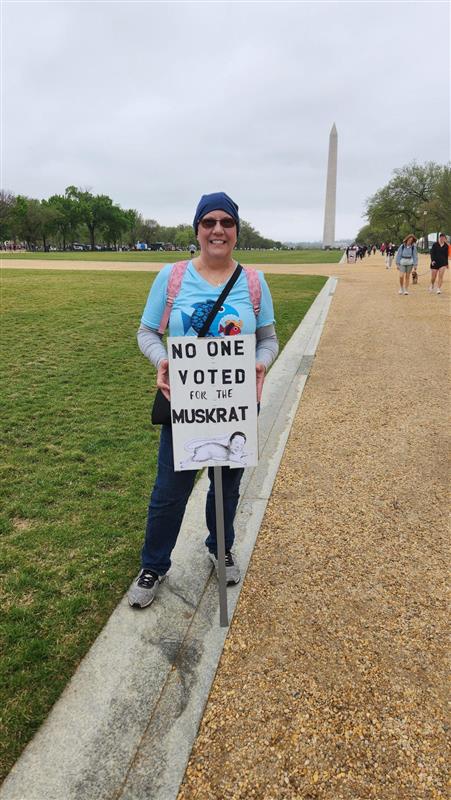






.jpeg)





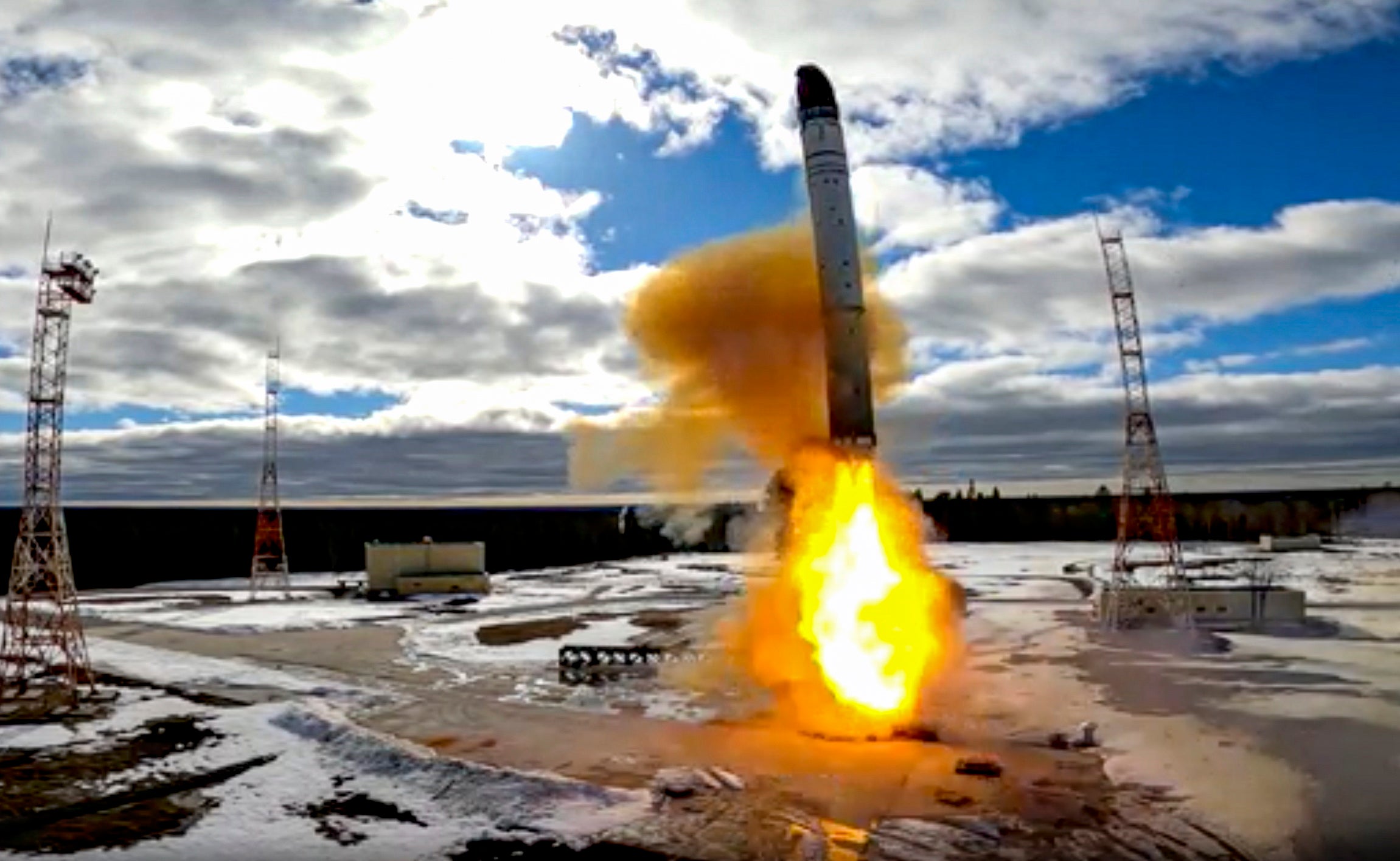



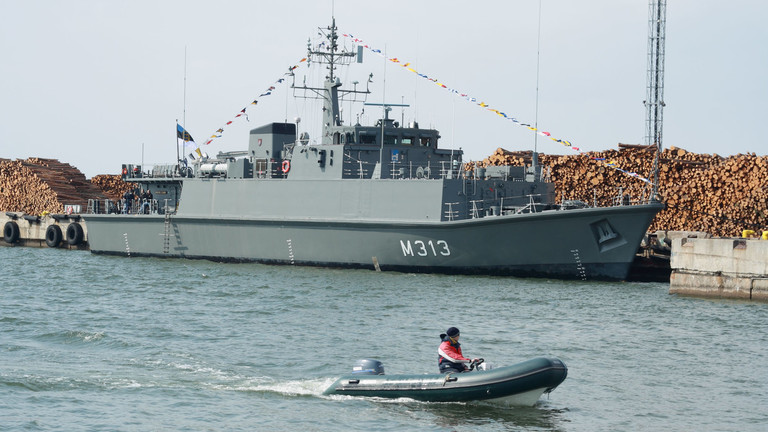

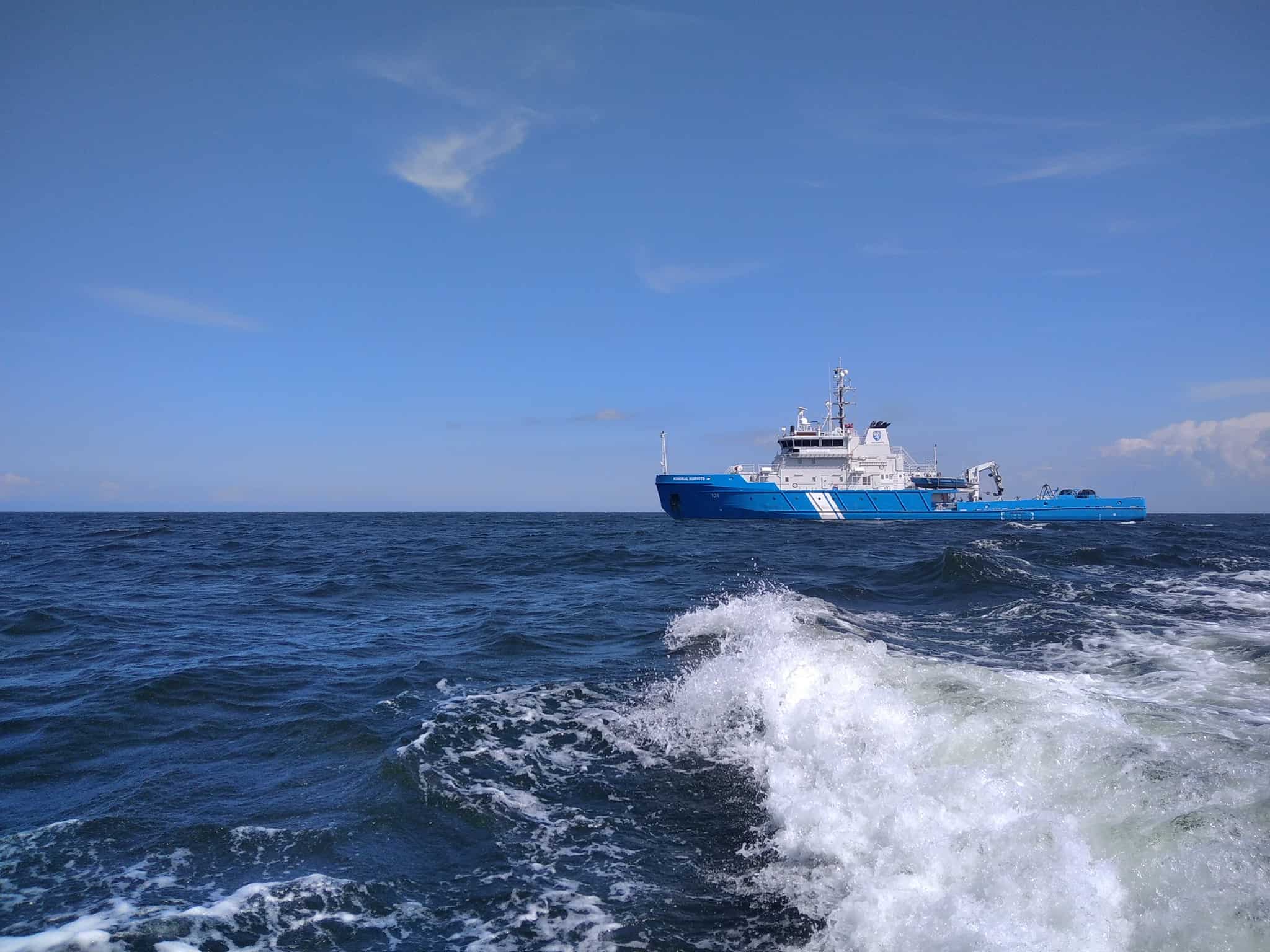


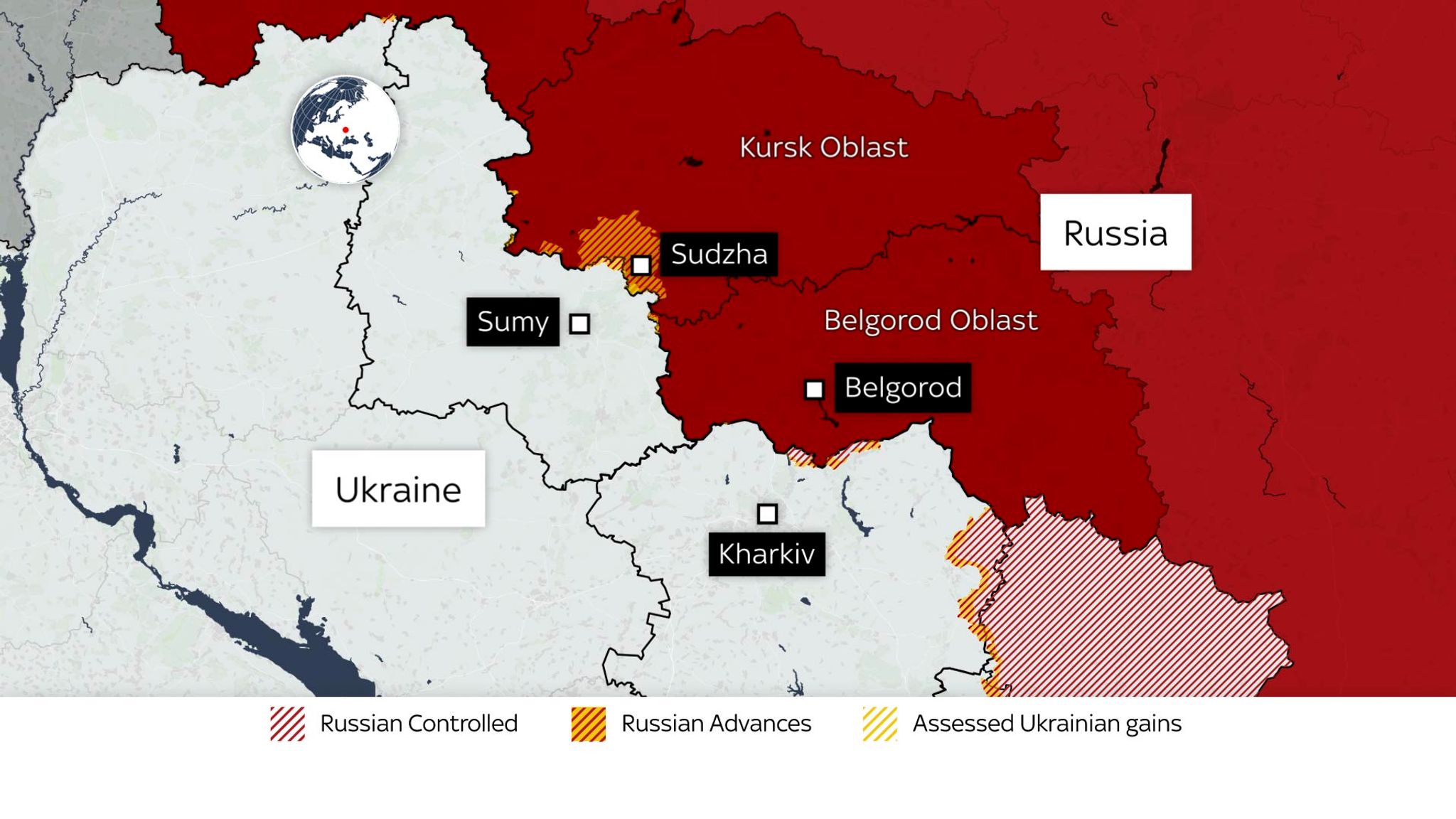












 RSS
RSS